A Global Conversation with Job Itzkowitz, Old City District’s Executive Director

Philadelphia has prepared to host a record number of visitors in 2026 and Old City expects to be a primary hub. While Old City may be best known as the home to Independence Hall and the Liberty Bell, the neighborhood also has a myriad of local businesses and cultural institutions that contribute to its distinct character. As the Executive Director of Old City District, Job Itzkowitz is at the forefront of caring for the commercial area of the historic district and ensuring that it is clean and safe, both for first-time visitors and those who walk its streets daily. He is deeply committed to his Philadelphia community and has long worked to use his experiences for good.
Itzkowitz encapsulates what it means to be a global citizen by appreciating the differences of other places and learning how to better his own environments for the benefit of others. His extensive international travels have not only expanded his personal perspectives, but inspired him to bring innovative ideas home to Philadelphia. We are pleased to share an insightful Global Conversation with Itzkowitz as he delves into his involvement with the Semiquincentennial and what his journeys abroad have taught him.
Madi Costigan: Are you a Philadelphia native? What motivated you to join a career focusing on the improvement of the city?
Job Itzkowitz: I was born and raised in Philadelphia. I knew early on that I wanted to have a career where I was improving the world in some way. While in college, I was doing a lot of diversity and intergroup work. I started thinking about becoming a civil rights lawyer, but recognized it was unlikely that I would be working on a major civil rights case, which happens every 50 years or so. Still, that planted the seed of law school in my mind.
When I came back from college and before I started law school, I co-founded Young Involved Philadelphia, which was my first local exposure to getting involved in policy work. During law school, I realized that a good way to fulfill my goal of improving the world was through public policy work. I went on to practice law and was spending any free time I had volunteering for non-profit boards, including an organization called Philly Fellows, which sought to address Philadelphia’s brain drain by offering fellowships to graduating students in the area who were not native Philadelphians, while simultaneously building capacity at small non-profits.
Several of us who had been on the Young Involved Philadelphia board started USA250, which is now Philadelphia250, with the goal of making Philadelphia the central celebration and commemoration place of the Semiquincentennial in 2026. I then had an opportunity to work for City Council, which aligned well with my professional goals. I served as Deputy Chief of Staff and Director of Policy and Legislation for a City Councilmember. I served for about two years before I had the opportunity to work in this role with Old City District, which really allowed me to make some of the capital improvements in the historic district that I had hoped to fulfill through USA250.
MC: Since you co-founded what is now Philadelphia250, how has your experience been working with so many other leaders in the city in regards to this initiative and relative partnerships?
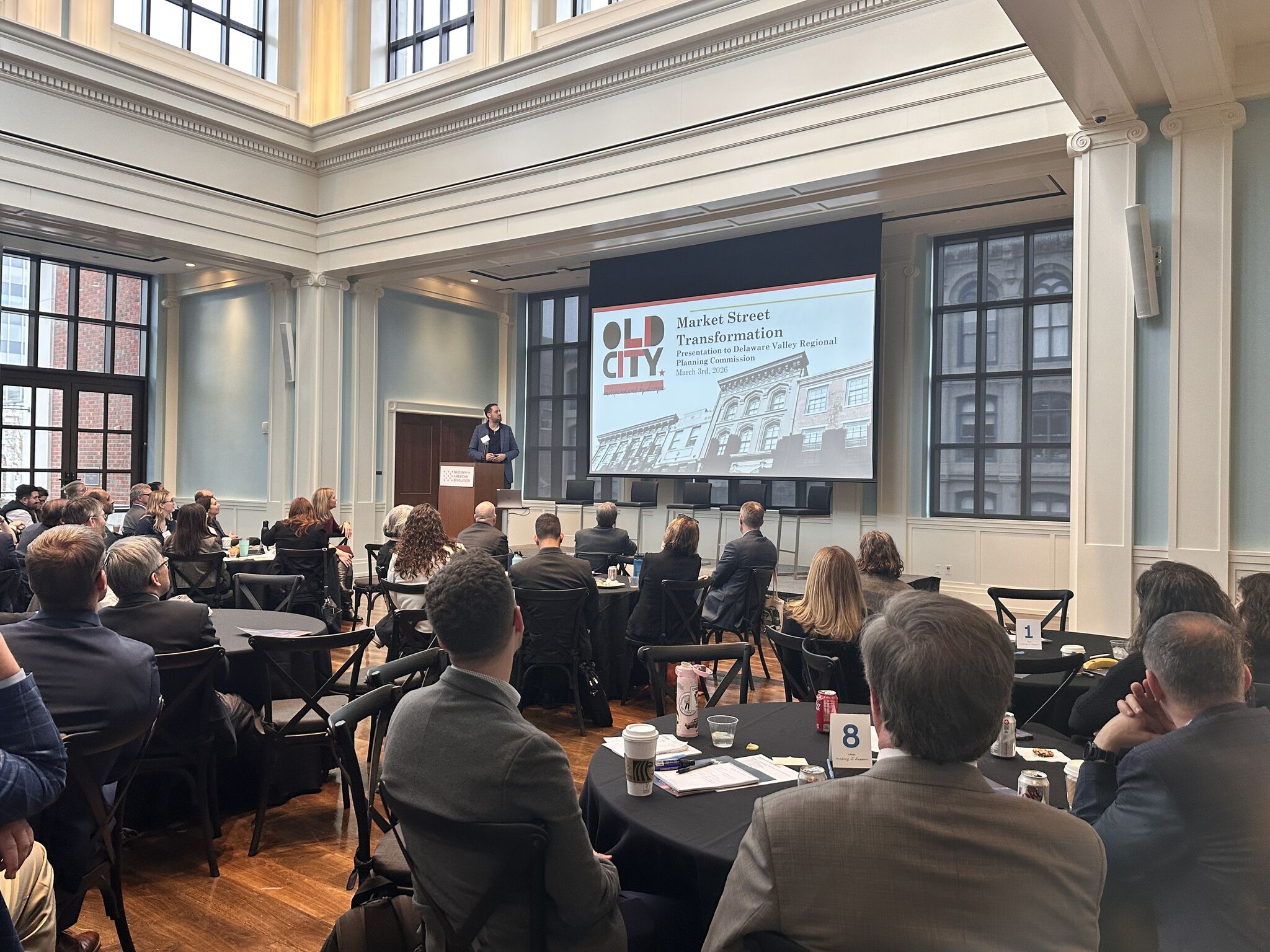
JI: Nothing works without partnership. A lot of people think that our role as a business improvement district in Old City is to do tourism marketing. But we have such outstanding, larger-budgeted, visitor-focused organizations in Philadelphia, such as Visit Philly, the Philadelphia Convention and Visitors Bureau, and the Philadelphia Visitor Center, that our role is to support and share their efforts with the business community when opportunities arise. Our role is to supplement city services, such as making sure the streets are clean and safe, so that when visitors do come to Old City, they experience the best of the neighborhood.
None of the amazing events taking place in 2026 would be happening without partner collaborations, whether that was from the early efforts planning for the 250th anniversary, to securing the MLB All Star game and PGA Tournament, or to more recent activity with outreach to all of our neighborhoods in the city. All of that is coming from partners. We're grateful for that.
MC: Old City District laid out Vision2026 over 10 years ago. When did preparations for this milestone year begin on your end, and what role is the Old City District playing in these initiatives and celebrations?
JI: Vision2026 was originally framed as a master plan. We realized that Old City District didn't own any land and it didn't write any laws, so there was not really any way for us to exercise control over the built environment other than keeping it clean. So we framed it as a “vision plan,” and that vision set forth what Old City stakeholders would like to see by the time 2026 arrived.
Out of Vision2026 came several clear directives about making the neighborhood greener and more pedestrian-friendly. We also wanted to encourage new businesses and neighborhood growth, in terms of residential, employee, and visitor populations, while not having everyone arrive in their own cars because that would have negative impacts.
So, we started working on several projects. The largest was through a partnership with the City of Philadelphia and the Independence Historical Trust, which included a road diet for Market Street with two pedestrian-grade bike lanes on each side, a shared-space plaza on 2nd and Market, extending out of Wilson Park, and improvements to Wilson Park. We have a few other public space improvement projects, as well as mode improvements– changing how people get around. I think that Philadelphia is going to have a great 2026, but we shouldn't lose sight that this is one year, and we need to continue planning and improving for the future.
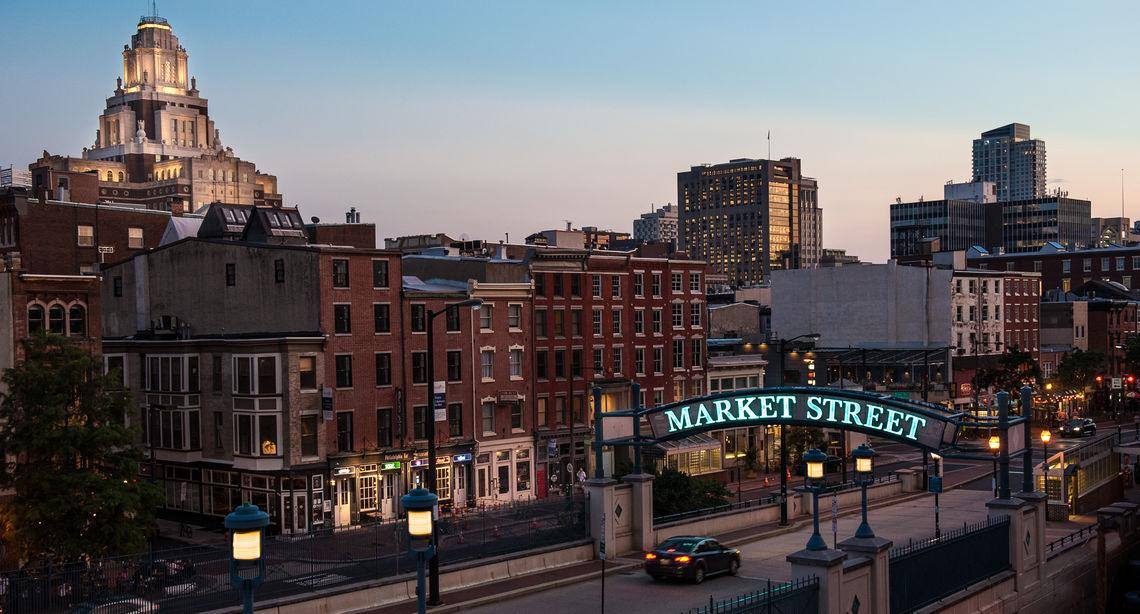
MC: Independence Hall in Old City is a National Historic Landmark and UNESCO World Heritage Site, and the location where the United States was signed into existence 250 years ago. How are these designations significant to Old City?
JI: Before the pandemic, the average daily head count in Old City was about 19,000 office workers, 12,000 tourists, and 5,000 residents. Now, that math has changed, not just due to the decline in tourism in the immediate years following, but due to the decline in office workers too. Our offices are still building back, but it is now more important for people to come visit Old City and to have a positive experience, so they can report back to their friends and families about the great time they had in the neighborhood.
Like other World Heritage Sites or World Heritage Cities, the site is not a standalone. It's in Old City, which is part of a real working neighborhood. People really live here. People really work here. And when you come and experience one or two of the historic sites, you then want to go see what the culture of the neighborhood is, and all that it’s able to provide, so we rely upon those visitors here to help support the economy.
MC: Moving on to your international travel experiences, what countries have you visited abroad, and how do you decide where to travel to?
JI: I have been fortunate enough to travel to 40 countries. Most recently, I went to Switzerland for Christmas, and before that, Finland for Thanksgiving. My family usually decides where to visit based on the timing and price of flights. I do try and explore new places, but I do have some old favorites as well. I studied abroad in Paris. I lived there for 5 months and I try to go back every year.
What I started to discover in the last five years is that in addition to going to the world capitals, I find a lot of value in going to a country's second city or a region’s second city. I learned this on a trip to the Baltics, where my wife and I went to Vilnius, Lithuania; Riga, Latvia; and Tallinn, Estonia. These are not major destinations for Americans, but we found so much value in cultural exploration.
We have started considering where we can do valuable layovers, and where we can connect on the train instead of connecting in the air. We had such a great, rich cultural experience in Lyon after traveling there from Paris, and learned how it was different from Paris. Philadelphia now has the flight directly to and from Nice, and we took advantage of that as well. Last summer, we traveled to Belgium and stayed a few nights in Ghent, then flew to Mallorca, and then Valencia on the way back. I would say the biggest thing is going somewhere we haven't been, where we can learn.
MC: Have your travels impacted your professional development in any way? Have you learned any lessons or strategies from other cities that could apply to Philadelphia?
JI: Not only do I ever witness something, I always witness something. One thing that Philadelphia has historically struggled with is adopting best practices, let alone from neighboring American cities, but certainly from abroad. That might be due to lack of exposure or a lack of familiarity, but I am constantly and aggressively working to bring back some of the things I've learned from abroad, and there are things that you might not expect from different areas.
Mexico City has a great transit system, including bus rapid transit with dedicated protected lanes, and I was able to meet with an international relations staffer from an office there called City Lab, to discuss the implementation processes around those and how long they can take. Similarly, in Copenhagen, I had a meeting with the founder of a company that makes volumetric sensors for wire trash cans, to see if they could be applicable at home.
One of the projects I'm working on now relates to containerized trash. The first time I saw containerized trash in action was in Porto, more than 10 years ago. I was shocked and amazed by it. I recently met with a representative of a leading Spanish containerized trash system vendor in Valencia. Spain has such systems in most cities, and I was eager to learn more about how they worked.
Some of the residential neighborhoods in Lima have really wonderful raised intersections, which slow down traffic and are something that Philadelphia could learn from. I was on a bus in Oslo, and I started noticing that it wasn't stopping at any red lights. I realized that the bus had signal prioritization, meaning when the bus approached the intersection, the traffic signal switched it to green, so the bus could move faster.
Paris has automated train lines. I know how often operator availability can delay Philadelphia’s trains, and if Paris can work with its labor unions to facilitate this change, I know Philadelphia can too. Utrecht has bike infrastructure in three-lane rowhome communities that could work in the same way here, given the housing infrastructure similarities.
I witnessed great adaptive reuse in Riga and Budapest, which utilized buildings for purposes other than their original intent. In Riga, a retired airplane hangar is now a beautiful market (similar to Reading Terminal Market) and Budapest has adapted many war-torn buildings into “ruin bars.” Stockholm and Budapest both integrate ferries into their regular transit system, so it is an interesting question as to whether something like that could work on the Delaware from the northeast to Fishtown to the Navy Yard.
In Valencia, Luxembourg, and Nice, there are incredible children’s playgrounds that incorporate concepts of Danish risky play, which involves a little bit more risk and problem-solving than a fully padded environment. We’re seeing great examples of that in Philadelphia, with Anna Verna Playground at FDR Park and plans for similarly exciting playgrounds at Franklin Square and Penns Landing Park.
Even though these are “vacations” for my family, I can’t resist the opportunity to learn from professionals in the areas we visit to see what ideas I can import back to Philadelphia. My photo wheel is always filled with crosswalks, trash cans, and trains from my travels. There is always something to learn.
We look forward to seeing some of these translated to Philadelphia! Thank you so much for your time and enjoy the 2026 celebrations!
For more information on the Old City District and their initiatives, visit https://www.oldcitydistrict.org/.

