William T. Coleman Jr.’s Legacy Lives on in Philadelphia

During the 1900’s, a champion of civil rights and lifelong public servant walked the streets of Philadelphia and left a long-lasting legacy. William T. Coleman Jr. was an attorney in our city for many years, and his impact on the legal system and nation as a whole changed the course of history.
Coleman attended the University of Pennsylvania, then graduated at the top of his class at Harvard Law School. He spent the majority of his legal career practicing in Philadelphia, also taking on civil rights cases pro bono to advocate for justice and change in the legal system. His dedication and intellect propelled him to national significance, as he became the second African American to serve in the United States Cabinet and the fourth Secretary of Transportation. Coleman earned the Presidential Medal of Freedom in 1995.
Notably, the former Secretary acted as the Chief Assistant alongside Thurgood Marshall in the groundbreaking Brown v. Board of Education case that resulted in the ruling that deemed school segregation unconstitutional. The two attorneys were not only determined civil rights advocates working toward the same systemic changes, but close friends, even laid to rest next to each other in the Arlington National Cemetery alongside their wives.
As described by the William T. Coleman Jr. Foundation, Coleman’s “career as a groundbreaking attorney, public servant, and advisor to leaders across government, law, and industry, demonstrated the power of principled leadership in shaping a more just and free society.”
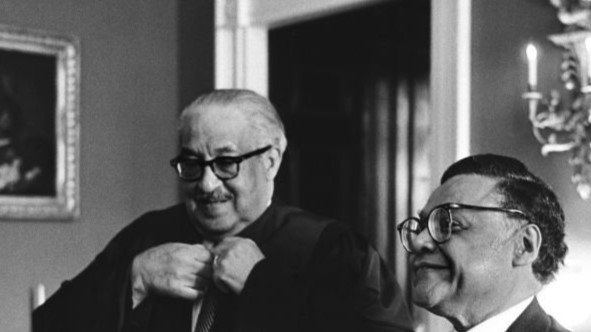
As our city and nation come upon a decade without Coleman’s presence, his legacy and influence live on. To encourage the recognition that this important individual is due, the William T. Coleman Jr. Foundation hosted the Inaugural Civil Rights and Constitutional Law Symposium: A Celebration of the Life and Legacy of William T. Coleman Jr. and the Constitution.
On March 10, 2026, presenters and attendees gathered at the National Constitution Center “to celebrate the extraordinary life and legacy of the late Secretary William T. Coleman Jr., a proud Philadelphian whose career reflected the highest ideals of service, leadership, and justice,” as stated by Board Chair and President of the Coleman Foundation, Lowell Thomas. Thomas continued, “as our nation approaches the 250th anniversary of the Declaration of Independence, it is especially meaningful to gather here in Philadelphia, the birthplace of American democracy, to honor one of our own.”
Participants in the symposium presentations included Thomas, Civil Rights Attorney and MSNBC Legal Analyst Charles Coleman Jr., Temple Professor Laura Little, and former U.S. Secretary of Transportation Rodney Slater. Touching on topics from Coleman’s achievements to civil rights in the era of social media, panels delivered insightful ideas on history and contemporary issues with the backdrop of Philadelphia acting as a meaningful addition.
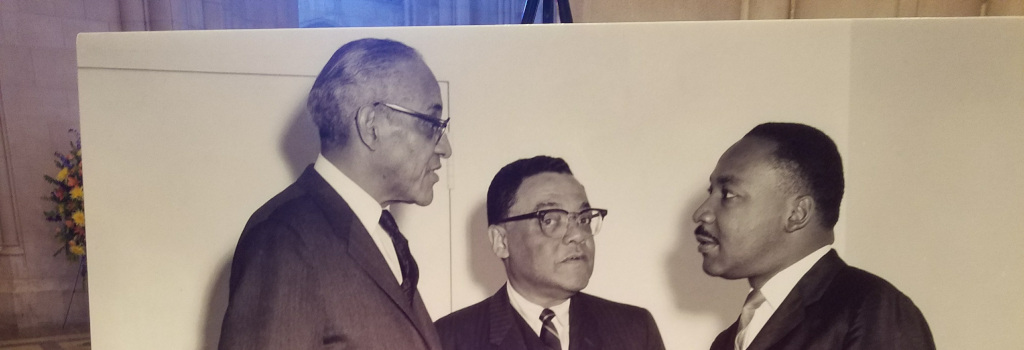
The William T. Coleman Jr. Foundation is an active nonprofit in the Philadelphia community devoted to public service and maintaining the civil rights advocacy as exemplified by their namesake. Coleman’s son, Billy, set out with the original visions for what exists today as the Coleman Foundation, the symposium, as well as the bas relief artwork of Coleman in the National Constitutional Center.
GPA has proudly partnered with the foundation, as they sponsored the grant for SDG #16: Peace, Justice, and Strong Institutions that went to Project HOME. The grant was accompanied by the mural of Thurgood Marshall, a fitting representative of the SDG and the community action by the Coleman Foundation.
The Civil Rights and Constitutional Law Symposium marked the beginning of new initiatives for the foundation, including new scholarship opportunities for “aspiring legal minds” and the promise of annual and supplemental gatherings in the name of civil rights advancements and recognition of Coleman’s everlasting influence. As the inaugural event, the Coleman Foundation plans to hold its symposium each year to inspire new discussions around civil rights and history.
Source/Image Source: https://www.wtcjr.org/index.php
