Past Rebuilt, Futures Reimagined: Heritage in Post-Conflict Cities

As a World Heritage City, Philadelphia is part of a vast international network through the Organization of World Heritage Cities (OWHC). GPA is a key representative of our city within this organization, partnering with international cities, leading delegations to regional conferences in order to collaborate on initiatives and learn about positive global efforts, and celebrating OWHC Day, which recognizes the founding of the OWHC and reinstills commitments to preserving heritage.
The OWHC offers an annual Young Travelling Scholarship to expose students to global heritage and new perspectives through travel. GPA is excited to highlight the account of two Philadelphia students from Temple University that earned this scholarship and took every advantage to explore and learn.
As students from Philadelphia, we are surrounded daily by history, including Independence Hall, the Liberty Bell, and the cobblestone streets where ideas about freedom and governance were forged. However, it took travelling abroad to see the value of heritage in a new light. Through the 2025 OWHC Young Travelling Scholarship, we explored Split, Dubrovnik, and Mostar before returning to Philadelphia to explore how post-conflict cities rebuild identity, preserve memory, and reimagine their futures rooted in resilience.
Our Path to the Scholarship
We first learned about the OWHC Scholarship through the Global Philadelphia Association and Jill Fornito at the Global Interdependence Center. Jill had been Reeva’s supervisor during her summer internship, which made this connection especially meaningful.
When we began preparing our application, we realized that the scholarship required more than simply recounting our studies.
It asked us to reflect on how our personal histories, academic work, and engagement with heritage shaped the way we see the world. We submitted a presentation sharing our background in heritage research, international relations, civic involvement, and global citizenship initiatives. We hoped to contribute to conversations surrounding World Heritage Sites beyond our own city.
For future applicants, we suggest taking your time to reflect rather than trying to sound overly polished or expert. Genuine curiosity is just as important as technical knowledge. Write honestly about what you care about and how your voice fits into global preservation conversations. Understanding OWHC and UNESCO’s missions ahead of time also helped us. It reminded us that the scholarship is not simply about travel; it is about learning, documenting, and sharing what you discover with your own community.
Most of all, the application process showed us that young people have a place in heritage discussions. We are often taught to see history as something already built. This program encouraged us to step into places where history is still being interpreted and protected. That became our first lesson: heritage is not just inherited. It is something you carry forward.
Our Experience with the Organization of World Heritage Cities
Throughout our interactions with the OWHC, we saw how intentionally they work to balance the preservation of cultural memory with the realities of modern life. Their team views heritage as something that must remain connected to the people who live within it every day.
We were especially moved by the way the OWHC prioritizes community engagement. The organization actively highlights local voices, perspectives, and cultural knowledge when considering preservation. When we met representatives in Dubrovnik and spoke with residents in Split and Mostar, we saw the impact of that approach firsthand. The heritage was not just about buildings, architecture, or UNESCO status; it was always about the people.
Youth involvement was another component that resonated deeply with us. The OWHC team continually emphasized that young people are the next generation of heritage stewards. Through this scholarship, they created space for us to ask questions, observe, and add our perspective to global conversations. Instead of being passive learners, we were invited to participate and engage with leaders, including representatives from the Mayor’s office in Dubrovnik. This allowed us to represent Philadelphia abroad.
Our Motto: Past Rebuilt, Futures Reimagined
Our motto reflects what we witnessed throughout our journey. In cities shaped by conflict, rebuilding goes far beyond repairing damaged walls. It involves restoring confidence, rebuilding trust, and strengthening community ties. Every site we visited showed how memory can serve as a guide for the future. People use the past not only to remember, but to imagine new ways of living, healing, and growing. This idea became the heart of our project and continues to shape the way we think about heritage
Split, Croatia: 3 Days in the Heart of History
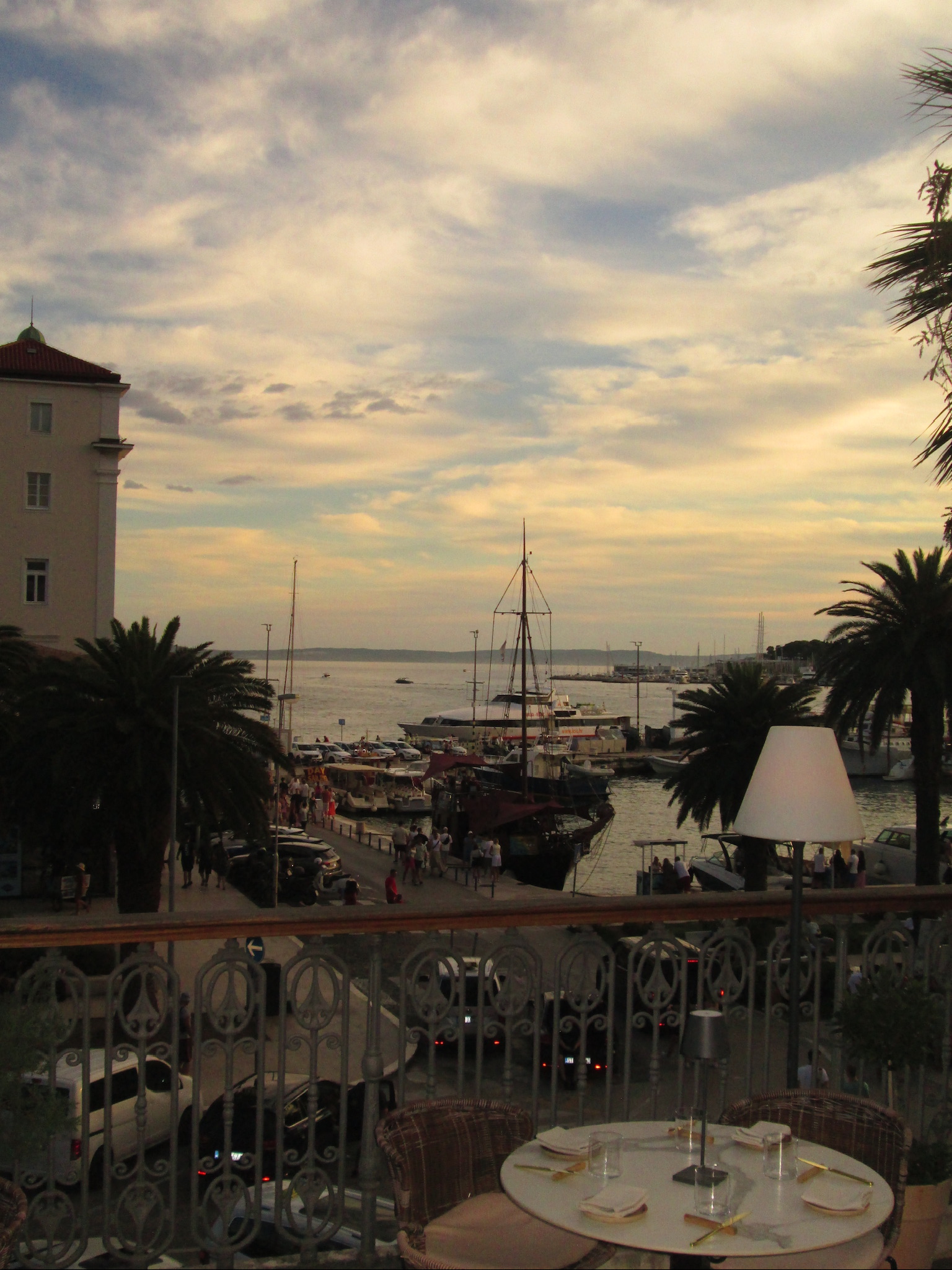
Our journey began in Split, Croatia, where we spent three days exploring Diocletian’s Palace, a UNESCO World Heritage Site that is lived in as a city. Walking through its marble corridors, we watched daily life unfold inside spaces that were once reserved for emperors. The palace was filled with markets, cafés, apartments, musicians, children, and tourists all sharing the same stone pathways. We ate lunch under Roman arches, listened to street performers inside courtyards, and watched vendors sell fruit, lavender, and handmade crafts beneath the same walls that have stood for over 1,700 years.
What made Split especially impactful was the way history and modern life coexist seamlessly. The site became a reminder that preservation does not always mean freezing a place in time.

We also visited the Cathedral of St. Domnius and climbed its bell tower for panoramic views of the city and the Adriatic Sea. Next, we took a guided heritage tour through the palace substructures. This helped us understand how Split evolved from a Roman imperial residence into a functioning city.
Dubrovnik, Croatia: A City Rebuilt After War
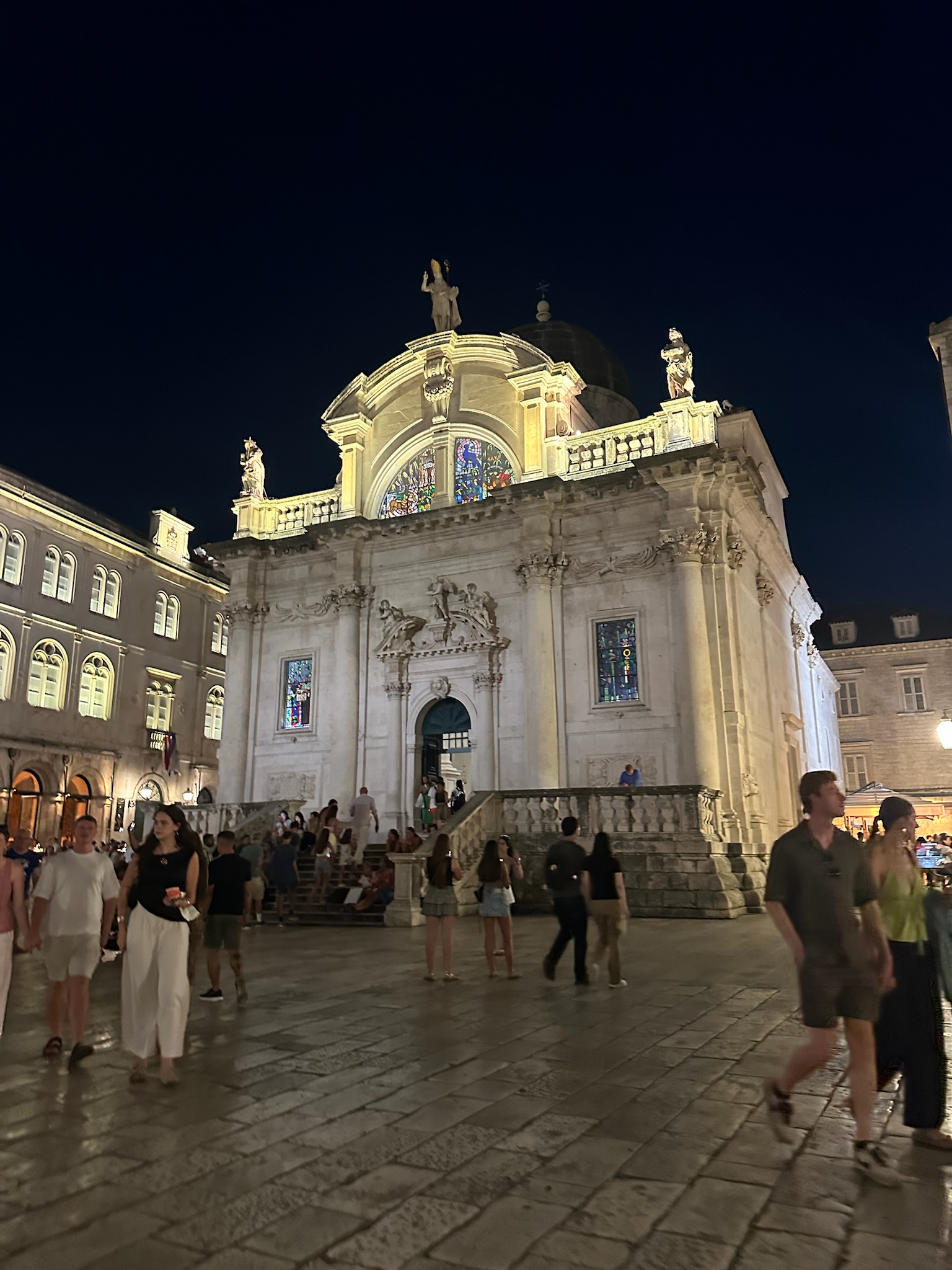
Our next stop was Dubrovnik, a city where the effects of conflict are still remembered. Walking through the Old Town, it was hard to believe that its iconic walls and rooftops had been heavily damaged during the siege of the 1990s. The destruction had reached far beyond architecture. It disrupted community life and local identity.
Meeting Mihaela Skurić, OWHC representative and Director at the Institute for the Restoration of Dubrovnik, helped us understand the city’s long and deliberate restoration. Her team works carefully to balance the pressures of tourism with the needs of local residents.
Dubrovnik taught us that resilience involves more than rebuilding structures. It requires renewing cultural traditions, strengthening community connections, and creating space for people to reclaim their history.
Mostar, Bosnia and Herzegovina: Memory and Reconciliation on the Old Bridge
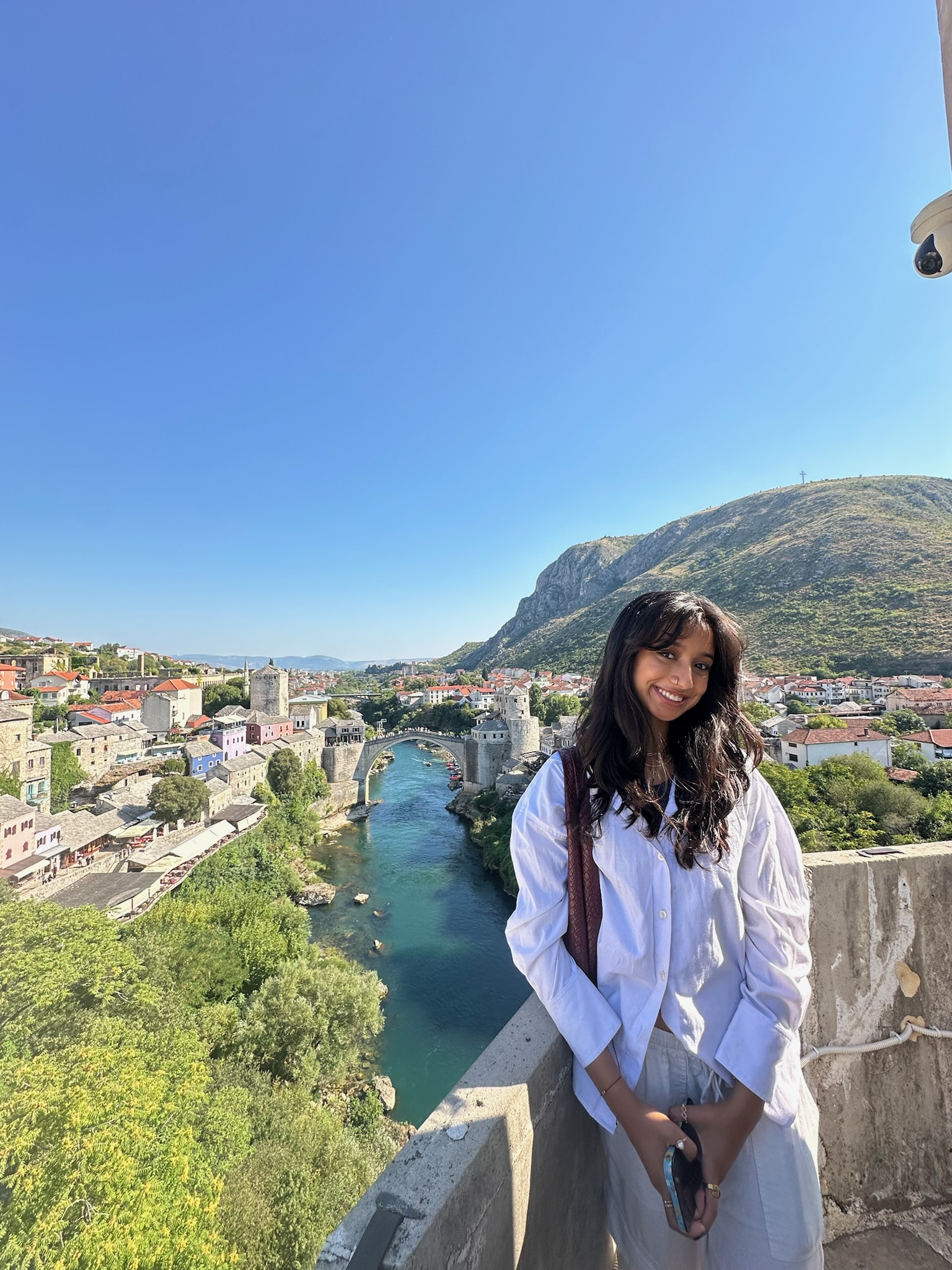
Mostar offered a different but equally powerful lesson. The Stari Most, or Old Bridge, destroyed during the war and later rebuilt, now stands as a symbol of reconciliation. Crossing it, we felt the weight of both loss and hope. Its reconstruction is a testament to the city’s desire for unity and healing.
The War and Genocide Museum left an especially strong impression. In one room, visitors from around the world had left handwritten notes addressed to the community. Many offered encouragement, prayers, and messages of support. Reading them reminded us that memory can be a bridge toward healing when people choose to listen and care.
Philadelphia: New Perspectives Brought Back Home
Seeing these cities through the lens of our Philadelphia upbringing helped us recognize the parallels between local and global heritage. Preservation, community engagement, and resilience look different in every place, yet they are guided by similar values. Returning home, Philadelphia’s landmarks now feel more layered. We see them not just as historic sites, but as living parts of our city’s identity.
Travel is especially meaningful for young people. It builds empathy, widens your sense of the world, and helps you understand why protecting heritage matters. This scholarship deepened our awareness of global preservation and shaped how we hope to continue contributing through our studies at Temple University.
Looking ahead, we plan to continue exploring heritage work and supporting cultural initiatives. Programs like OWHC and the Global Philadelphia Association show how young people can represent their cities abroad while forming new networks of learning and exchange. Heritage is not only a record of the past. It is a foundation for imagining the future.


