A Global Conversation with Dr. Ashley Jordan

In a city crowded with hundreds of historic sites and museums, Dr. Ashley Jordan is working to position the African American Museum in Philadelphia as an essential stop for visitors. And she’s already begun putting that vision into action.
In just five years, Dr. Jordan has led AAMP from facing potential funding cuts during the COVID-19 pandemic to being named one of Philly’s best museums by Condé Nast Traveler. Now, Dr. Jordan and her team at AAMP are preparing to move the museum to a new, 88,000 square foot facility on Benjamin Franklin Parkway — tripling their space for exhibitions.
Before joining AAMP, Dr. Jordan served as senior director of development for the National Underground Railroad Freedom Center in Cincinnati, Ohio. She holds numerous honors in the historical preservation space — including an appointment to former President Joe Biden’s National Museum and Library Services Board and a Black Excellence Award from the National Association for the Advancement of Colored People (NAACP).
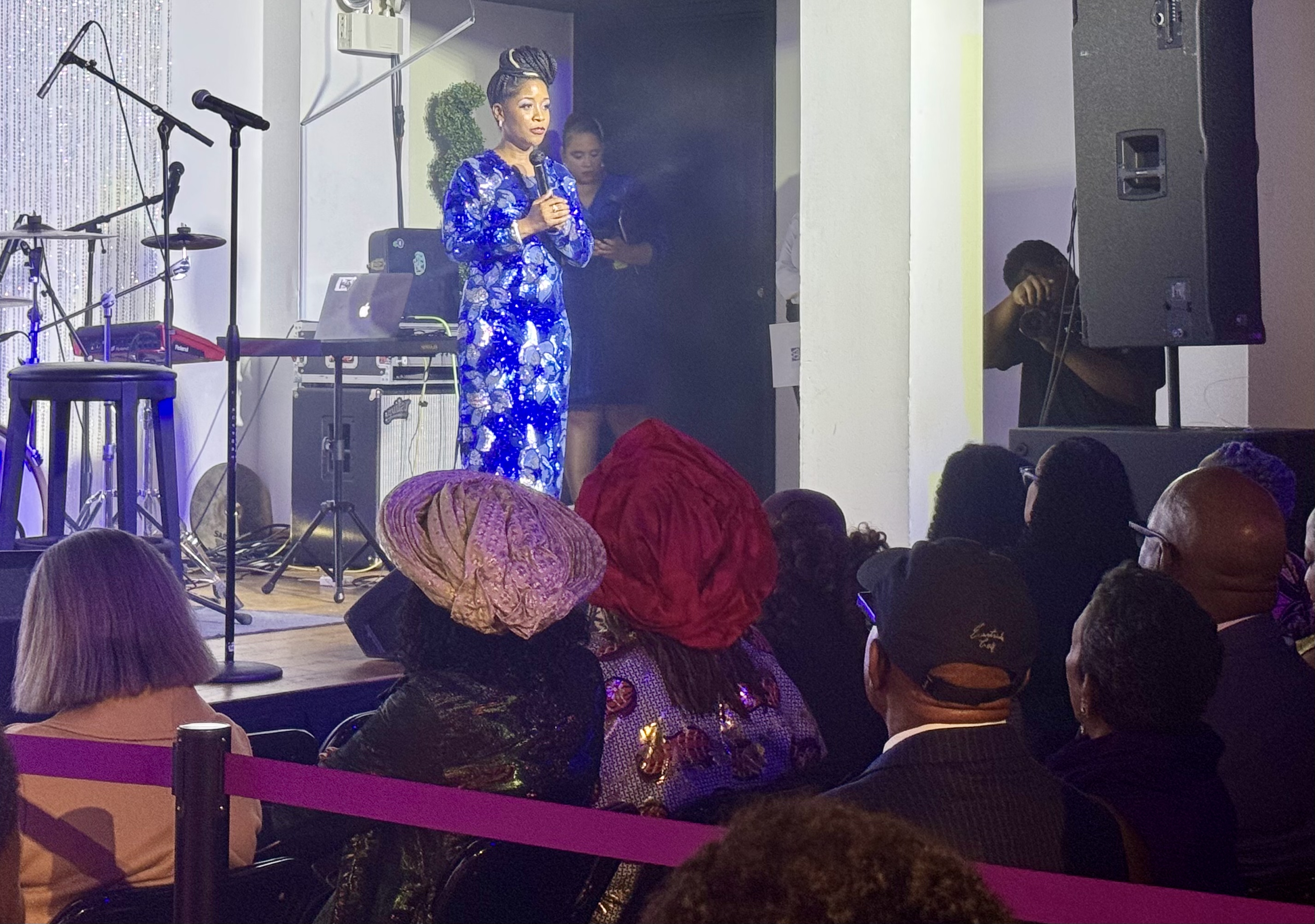
In recognition of her work at AAMP and cultural institutions across the country, Global Philadelphia Association is awarding Dr. Jordan with the 2025 Globy Award for Heritage and Preservation Leadership this December. We spoke with Dr. Jordan about how AAMP has grown under her leadership and the importance of celebrating America’s diverse history.
Julia Boehning: First, would you mind introducing yourself? Who are you and what kind of work do you do here in Philadelphia?
Ashley Jordan: Sure, I’m Dr. Ashley Jordan, President and CEO of the AAMP. My role at this institution is to manage the day to day operation. Our focus is African American history and culture — our collections tell the stories of the Black experience here in Philadelphia, going as far back as 1776 around the signing of the Declaration of Independence to the modern day.
And through our exhibitions, we act as informal educators — communicating messages of history, culture and art to the public. One of the things we’re most excited about is being able to communicate messages of history and its nuances. Our pieces — whether it’s through a painting, an artifact, a letter, clothing or other visual culture — have a connection to the “who, what, when, where and why” of history. That’s the part we love showing to our communities.
We also champion the fact that you don’t have to look far for history. History-making events have happened right here in your backyard; Philadelphia is so well positioned in the story of American history.
JB: To someone who hasn't been to AAMP, how would you describe the different collections and exhibitions that you have?
AJ: Our collection is very robust. I would say our offerings are very much centered with the museum-goer in mind, that we have programmatic offerings that represent a multi-generational experience — from young people to our seasoned museum-goer. And I think that’s the part that makes our site so special, we have something for everyone, and we love to celebrate stories.
We just want people to know history in its entirety, and we definitely give you the history that’s local to Philadelphia, as well as statehood history and national history. We have a little bit of everything.
JB: I’d love to know more about your background. How did you get into this historic preservation and heritage leadership space?
AJ: I came into this field through an internship at the Smithsonian’s American History Museum. It changed my life. This field is something I didn’t even know existed at first, in a sense that, I tried to do everything I could to avoid history growing up — because I thought the only thing you could do with a history degree is teach in the classroom.
The study of public history as a discipline is “history that belongs to the public,” and it’s told from a viewpoint of monuments and historic homes, battlefields and parks, zoos and planetariums. Being able to learn more about this field definitely inspired me to approach history as an informal educator. I’m an extension of the classroom, and I get to connect historical stories to the public through interpretation. That’s something I really enjoy.
JB: Was there any moment in that Smithsonian internship, or at another point in your early career, that really solidified this desire?
AJ: While we were in the galleries installing the exhibition, the family members of one of the individuals whose artifacts we were showcasing happened to be visiting the museum. When they saw their grandfather’s hat, the look of pure happiness and pride that came over their faces reminded me of the human side of history. In that moment, history felt alive to me — real, personal and deeply moving.
And I love the fact that history is still alive. It’s not something that’s in the past. It’s something that is still so present today. And I felt that through the visual representation of working on the exhibit — being able to talk to the family members and then being able to display their stories to the public. I got to see each piece’s origin story, its connection to the family and how it’s now part of the living legacy. And then our work as educators to show the public why each story is impactful.
That’s my reason why I wanted to be a part of this profession, because of our abilities to make connections; that’s the goal of history — to open minds, to change hearts. All these things can sometimes seem impossible, but if you have an impactful experience, it is possible.
JB: Aside from the Smithsonian, you worked at other museums across the country before joining AAMP. What were the biggest lessons you learned from working at these different institutions that you brought to your work here?
AJ: The National Park Service, the Smithsonian, the Freedom Center, Wilberforce — they all represented the various dichotomies of museum life, from big institutions to smaller ones. This variety shows the diversification in the offerings history can show you, and because of that, it helped me become much more well-rounded. I can relate to the subject matter through different lenses and provide an experience that is catered to people based on what they need. It also helped me understand a little bit more about the trends that impact museum-goers today.
JB: And how did you end up at AAMP? What motivated you to take on this role of president and CEO?
AJ: I came to the museum through a search firm, and when I had a chance to tour its exhibitions at the time, it felt like a museum that forgot it was a museum. And I wanted to be able to help usher in a change, because I felt like there were gifts that I had that would help this institution to realize its potential, to realize its greatness.
I’m happy we’ve been able to do that, because I do believe now that people view this institution like a museum and look to us to be the repository for all things African American history and culture. I’m grateful for that being a part of my tenure and the work I’m doing, to just keep adding to this great institution’s legacy.
JB: What do you mean by that? What were some of the things that, when you first got the position, you really hoped to see change or evolve under your leadership?
AJ: One of the things I wanted to do was raise AAMP’s profile and visibility. If people aren’t talking about us, they’re not going to come visit us. The museum has been here since 1976 — for over 50 years — but people weren’t visiting AAMP like they visit the Franklin Institute, the Barnes or the Constitution Center. We need to make sure that the African American Museum is also considered among the destinations within Philadelphia’s cultural treasures.
One of the things I wanted to do was make sure the programs, exhibitions, lectures, and even the staffing of the institution met the needs to change this perception. Also, the best recommendation or referral is word of mouth, because museums are sites of public trust. And so, by doing this work, people will seek us out.
JB: With these changes, what’s your broader vision for how you see the museum’s role in the Philadelphia community?
AJ: It goes back to the fact that Philadelphia is a hub for cultural treasures and a place for cultural tourism, so I think the museum is well-positioned as a place to visit for our offerings that tell this wonderful, diverse story that is American history.
We engage with other institutions through partnerships, collaborations on programmatic opportunities, as well as through our works for exhibitions. We have been doing that work to grow our mission for greater impact diversification and audience development.
On a personal level, we want to make sure our programs connect to things that matter to Philadelphians and visitors. When you live in a city that is an urban center, you talk about things that matter in the world in which they live. Such themes include: gentrification, the war on poverty, the reduction in the workforce, and this new climate in which the arts are under attack.
In response to these themes, collaborations — such as working with other museums, non-profits or scholars as workshop facilitators — have been helpful for us – to come together to share our resources, because we have to maintain art, we must maintain history. The work of preservation must continue.
JB: So, you joined AAMP back in 2021. Within these past five years, what have been some of your proudest moments and achievements doing this work?
AJ: One of my proudest moments was seeing the growth of our Juneteenth Celebration. In partnership with Wawa Welcome America, we kick off their independence festival to the parkway with the Juneteenth Celebration. Attendees can go from like 8,000 to 10,000, and it continues to grow. I remember, when I first came to AAMP, it wasn’t a block party, but we’ve extended the footprint to be an entire block leading into other streets. Those are things I'm grateful for.
I’m also appreciative that people continue to show up for the museum. We’ve seen an uptick in event rentals — people want to use this space for their celebrations, their birthdays, their milestone moments. Regardless of the climate we are in, my faith and hope in individuals interested in learning history that looks and feels inclusive serve as daily reminders of why sites like AAMP matter.
And lastly, I’m just so grateful for our impact and the fact that our reputation and how people view us has changed. It has been very helpful for us to engage, to connect and to celebrate the work we’re doing.
JB: On the other end of the spectrum, what are some of the most challenging aspects of this work?
AJ: Some of the challenging aspects of this work aren’t really challenges, they’re opportunities. When you do this type of work, particularly from a cultural lens, history has shown that — due to racism, greed and jealousy — we haven't always been given fair treatment in this country. We get asked questions, like, “Do we need another African American Museum? Why do we have culturally-specific institutions?” We never thought we’d be at this point in our history where people are questioning what we know to be true.
And the reason why all these things matter is because history has to be told unimpaired. We have to preserve history, the good and the bad, so people can make informed decisions. If we start pulling out the narrative and adding certain things that do not belong, that’s not telling factual history. I think the thing that makes America so great is the fact that we have been a story of diversity. Now, there’s so much roll back on celebrating the richness of America’s diverse voices and viewpoints. That’s the work that we have to do as an institution, to show and celebrate why inclusive freedom matters continuously.
JB: How does AAMP’s work align with broader conversations, both nationally and internationally, on Black history?
AJ: The way in which African American history connects on a broader and international level is the sense of the African diaspora, which is still alive today. That shared culture, despite the giant ocean separating us, wasn’t entirely disrupted. Through oral traditions, these customs have remained alive.
There’s the imprint of the impact. It’s all over, it’s worldwide. And I think that’s the part that should be celebrated a little bit more, the influence and the connectivity of the diaspora that maybe sometimes people don’t see, but it’s there.
JB: And, looking more broadly at this year’s Globy Awards, you’re being honored for Heritage Leadership. What does it mean to be recognized as a leader in the preservation of Philadelphia’s heritage?
AJ: I would say this honor is definitely important for me, in the sense that when you’re doing this work, you never know what the impact could lead to. But you know you’re passionate about it, and you know you have a dream and want to make a difference. To be recognized at this level, at this time, in the current climate of the arts under attack, it’s good to know Global Philadelphia is championing stories like mine and others’.
I feel like the work I’m doing is just a part of the long line of great luminaries that have come before me, and I think that’s what makes the city so great. The synergy we have in celebrating stories like mine and others’ encourages people like me to keep doing this work.
JB: What would you say is next for AAMP? How do you hope to see the museum grow as you continue your tenure?
AJ: The museum is looking forward to moving to the Parkway in 2029, and so that’s a big undertaking, but that’s good trouble. Being able to expand our story at a new location will definitely help to increase our areas of education, engagement and expansion. We know we are excited, but most importantly, we feel supported by our community, our city, and our museum supporters. This is something that we are definitely welcoming for our future.
With the new space, it’ll be 88,000 square feet. It will have a cafeteria and classrooms, but it will also give us the chance to tell large scale stories via our new exhibition space— because our current space is maybe under 30,000 square feet . And so, to be in a space where we can expand the galleries, we can offer a more complete story. It would just help us in a sense that we can now have a museum that’s of a 21st-century standard. That’s what we’re most excited about.
JB: Looking even further ahead, what sort of legacy do you hope to leave at AAMP? What do you hope visitors take away from your leadership?
AJ: My hope for my legacy at AMP is that I was able to take an institution and show that the impossible is possible, of course also with the support of a dedicated board of directors as well as a talented staff.
And I also think one of the things we sometimes take for granted in a workplace is having the right work culture. You have to have the right people in the room to help you get to where you need to go. And I feel like my role at this time is to help this institution make sure we have the right people in the room with their talents, their skill sets, and their passion to get this work done.
I want people to know that this is a museum for everyone. We have topics for everyone, and we had you in mind — this is a museum we wanted you to be proud to call your own. I want everyone in the city to have a level of ownership; this is your museum.
JB: You’ve worked in a couple different places across the country, what does the city of Philadelphia itself mean to you and your work?
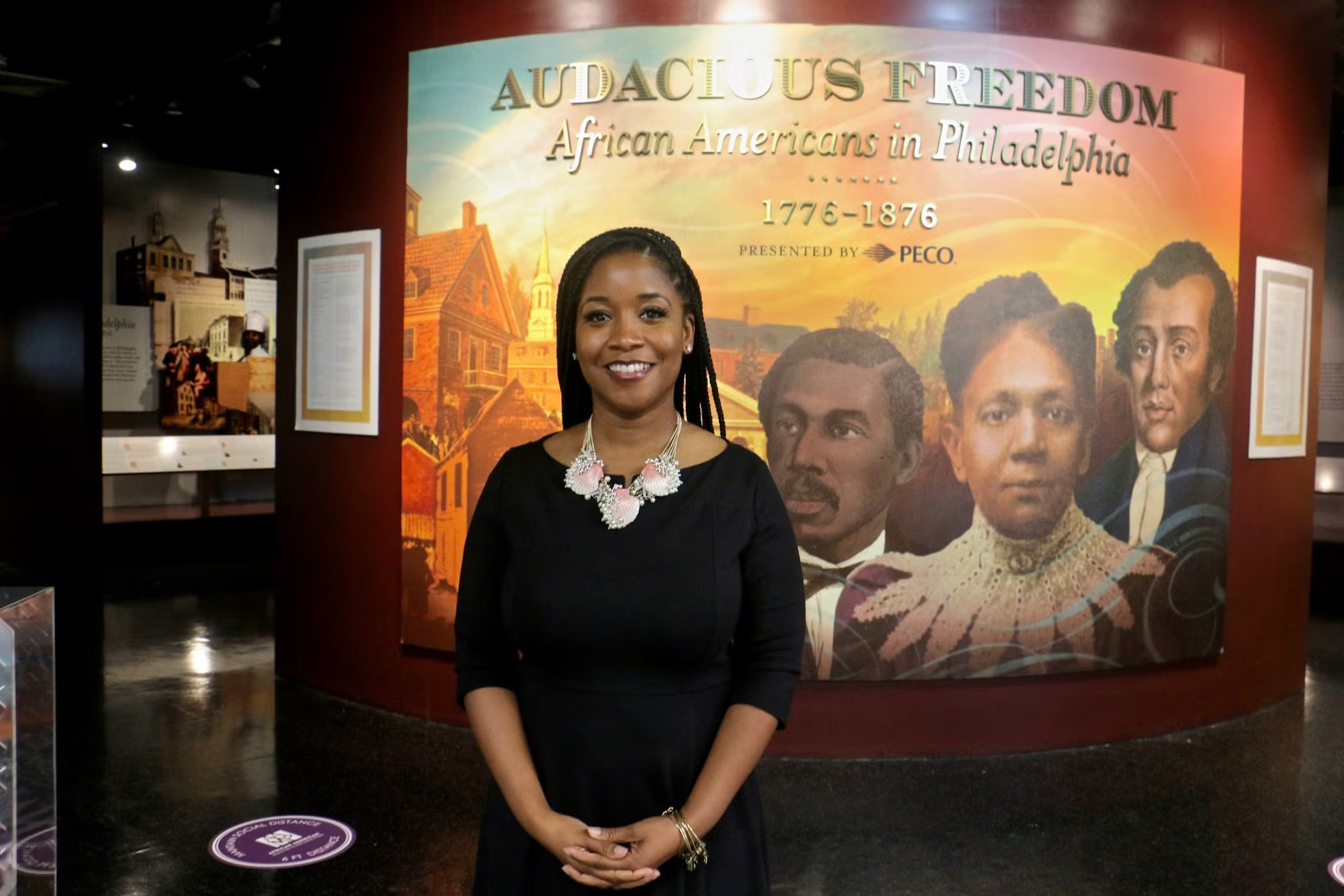
AJ: I have to say, the meaning of the city of Philadelphia in my work is a lot like our core exhibition. It’s called Audacious Freedom. It’s the stories of ordinary people making extraordinary contributions. I take inspiration from the stories of folks who’ve gone on before me because, even though they had less resources then, they were still able to get it done.
I’ve been working in the spirit of being audacious— audacious to act, to think, to live — so we can bring forth the transformative change that is necessary here at this institution.