Acknowledging Natural Resources as Climate Change Looms: GPA Visits Fairmount Water Works


GPA Visits Fairmount Water Works
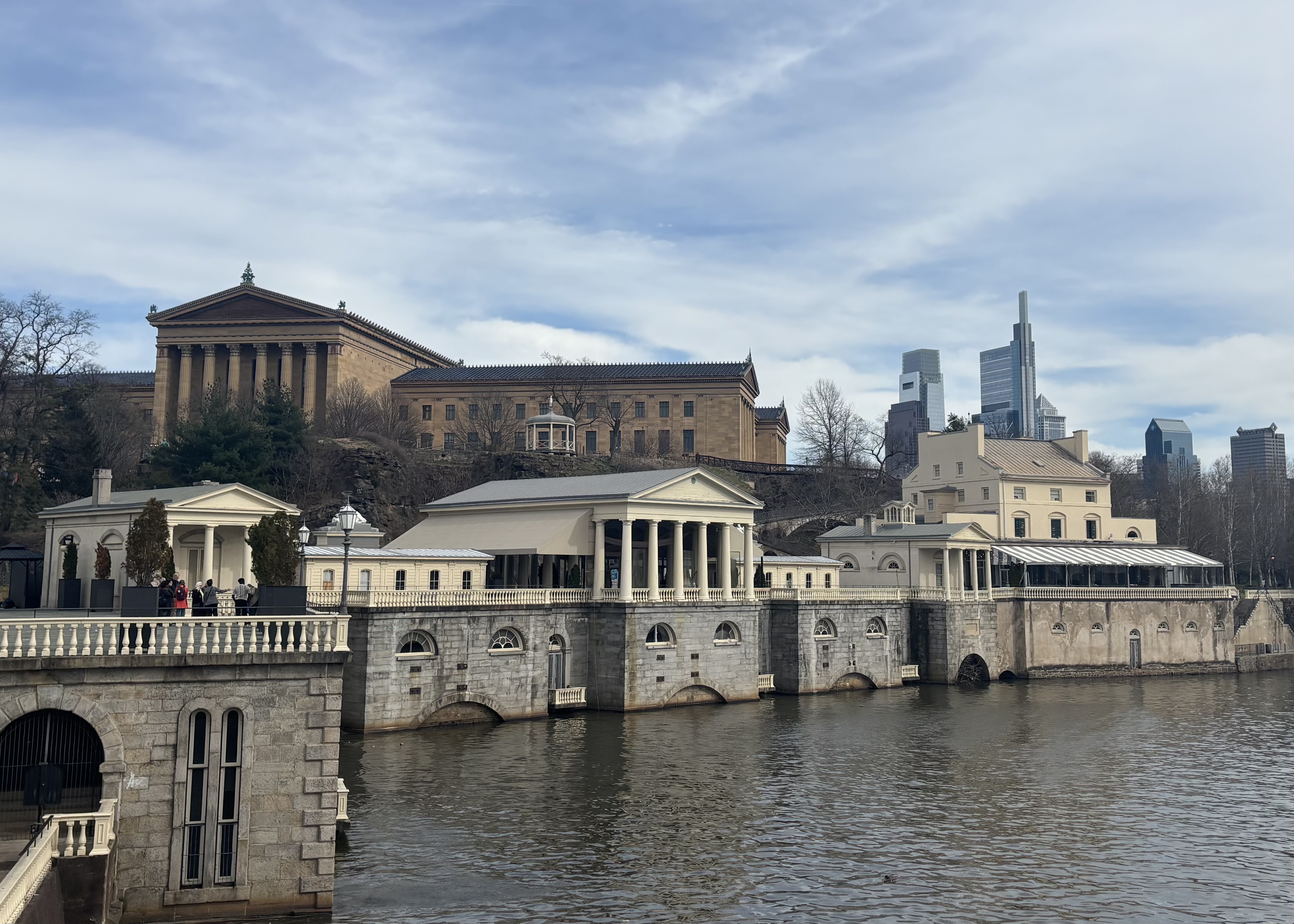
For the first installment of the 2026 NHL Site Visit Series, Global Philadelphia organized a visit to Fairmount Water Works. Opening in the early 19th century as the first water pumping station in the City of Philadelphia, Fairmount Water Works is now a National Historic Landmark and a leading urban environmental education center.
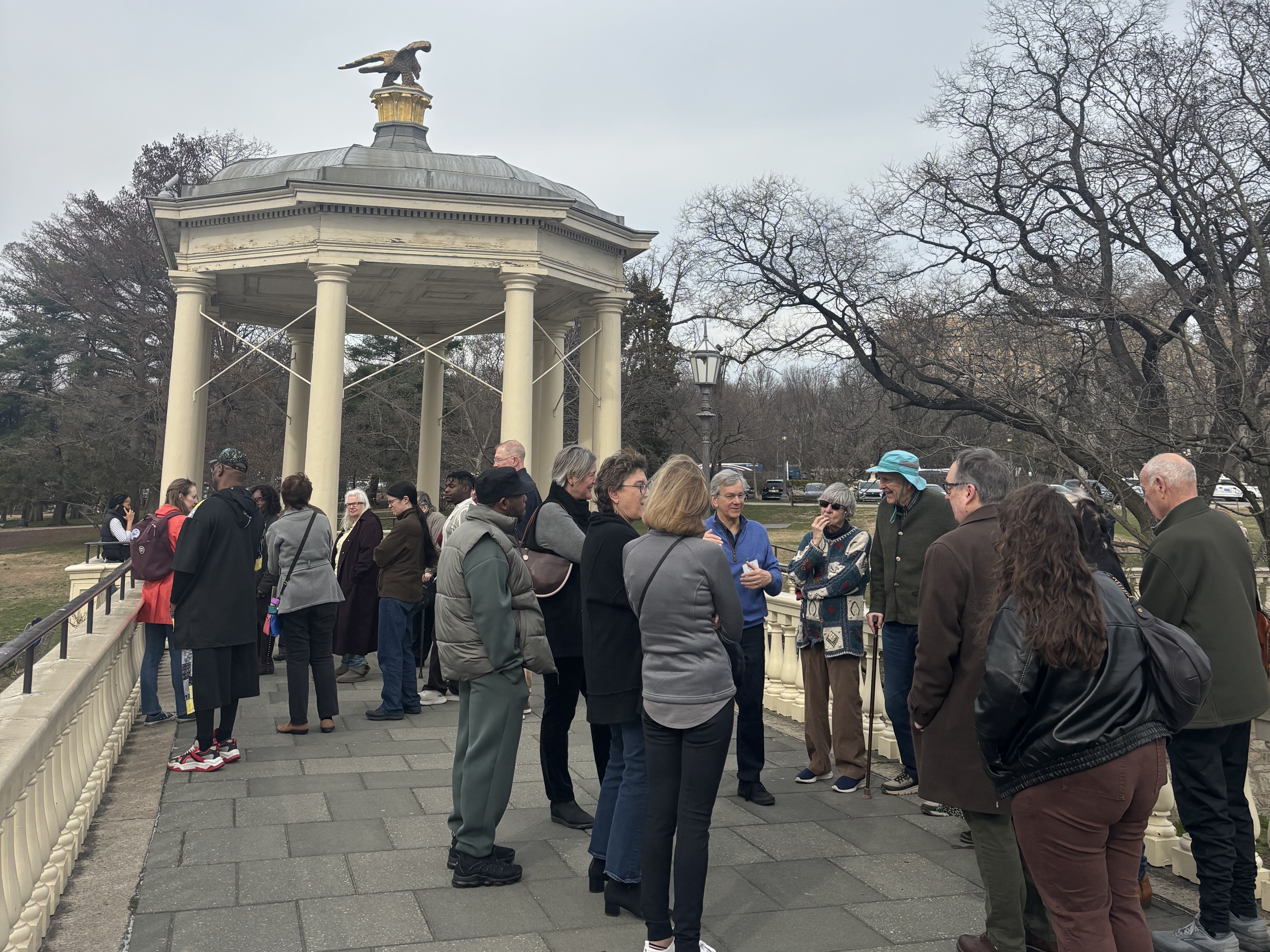
Visitors were treated to a tour of the building and its deck, which showcase the original architecture that aimed to resemble a country estate and express civic pride. The appeal of the facility contributed to increased visitorship, which led to more trust in the city’s water system. Educators at the Fairmount Water Works Interpretive Center guided our group and pointed out where the structure had evolved over the years, expanding to accommodate new technology and needs.
Journeying into the building, visitors are transported back to the 1800’s, as so much of the original structure remains, with stone walls, pipes, and turbines that have existed for generations. The museum is now covered in informational panels and interactive exhibits, describing anything from rainwater flow to the history of the building’s ownership.
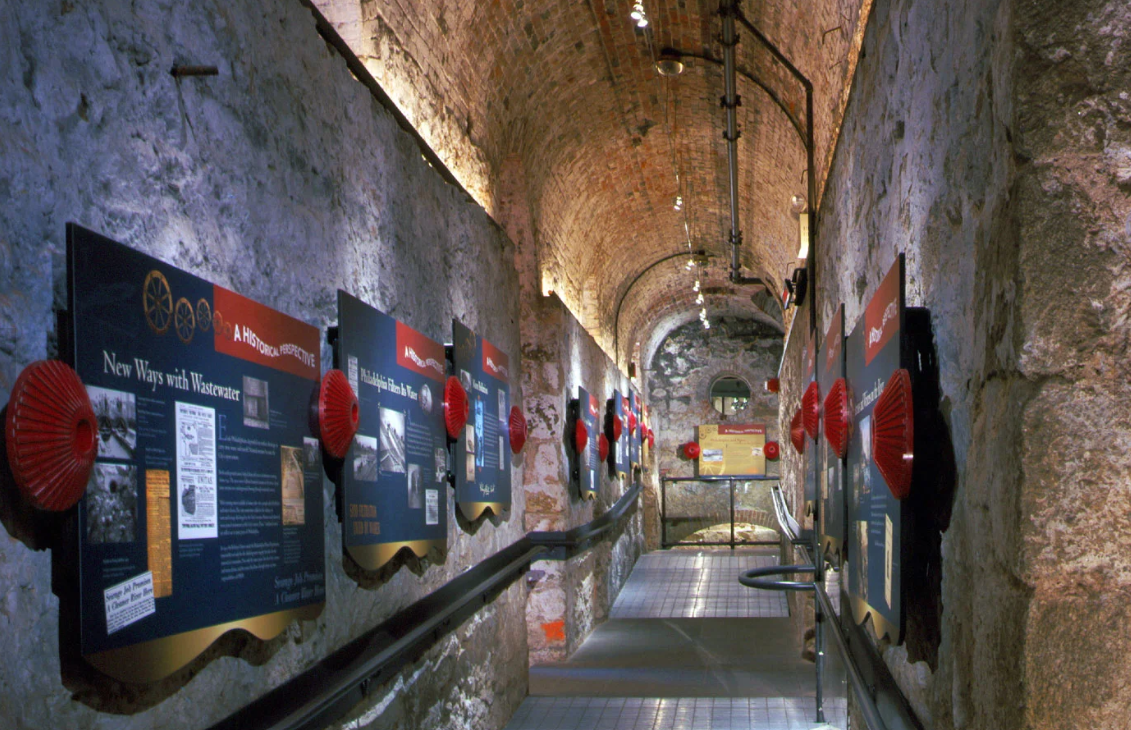
The past use of water for drinking as well as power was not only convenient, but sustainable. When threats of pollution came about during the Industrial Revolution, Fairmount Water Works ownership bought estate land northward along the Schuylkill in an effort to protect the waterway from industry, and today, this land is known as Fairmount Park.
In a room with an original pipe that flowed from the river, through the building, and up to the reservoir from days past, a video on the history of the Water Works plays, followed by a reading of a poem. These experiences merge the practical history of engineering with the emotional importance of water in both nature and human life, highlighting the need for its protection and consideration.
Fairmount Water Works not only informs about the facility’s history, but immerses visitors in the importance of water and the efforts that are needed to maintain safe and equitable access to it. They hold monthly and drop-in educational events, work with the Philadelphia school district on water-based curriculum, and even were a partner for the Walk for Water, which took place the day after our visit along Boathouse Row and raised awareness and funds for clean water initiatives.
A freshwater mussel hatchery is housed within the center– an active practice in water filtration and ecological preservation, as freshwater mussels are integral in purifying bodies of water but are unfortunately endangered.
A Changing of the Tides
Conservation efforts are especially close to home for Fairmount Water Works, which has faced major challenges caused by climate change. For the center, water was once its primary resource, and now it is its primary threat.
The facility’s location on the banks of the Schuylkill River make it susceptible to flooding, and 2021’s Hurricane Ida left its mark, forcing the center to shut its doors for months for necessary renovations in response to flood damage. Strong measures are necessary to preserve the site and mitigate the effects of worsening climate change, which also affect the conditions necessary for water life to thrive.
Pennsylvania is the state most prone to flooding in our country, and this poses serious risk to infrastructure. Boasting 67 National Historic Landmarks, Philadelphia is recognizing the threat of natural disasters on historical structures. We are not alone in facing this problem– other World Heritage Cities around the world are experiencing their own levels of climate change effects on their heritage sites and landmarks.
According to UNESCO, 73% of World Heritage Sites are at high risk of water-related hazards, an alarming statistic that necessitates active water stewardship and innovation to address. Both water scarcity and flooding threaten sites with infrastructure around the globe, including the Historic Sanctuary of Macchu Picchu in Peru, Petra in Jordan, Ancient Thebes with its Acropolis in Egypt, and Coro and its Port in Venezuela. Many natural sites like national parks face issues caused by climate change, but the protection of infrastructure against natural forces presents its own challenges.
These issues are even more reason to experience local and global landmarks– you never know when a piece of heritage may be changed or lost forever. GPA’s visit to Fairmount Water Works brought this sentiment to the forefront, informing staff, guests, partners, and representatives of other local NHLS, such as Woodford Mansion and Carpenters’ Hall.
Sources
https://whc.unesco.org/en/news/2788
https://www.wri.org/insights/water-risks-unesco-world-heritage-sites#:~:text=Water%20risks%20%E2%80%94%20such%20as%20drought,much%20water%2C%20or%20too%20little.
https://insideclimatenews.org/news/01022026/with-waters-rising-pennsylvanias-historical-treasures-must-adapt-or-collapse/?mc_cid=70ca927f48&mc_eid=8765a258a0


