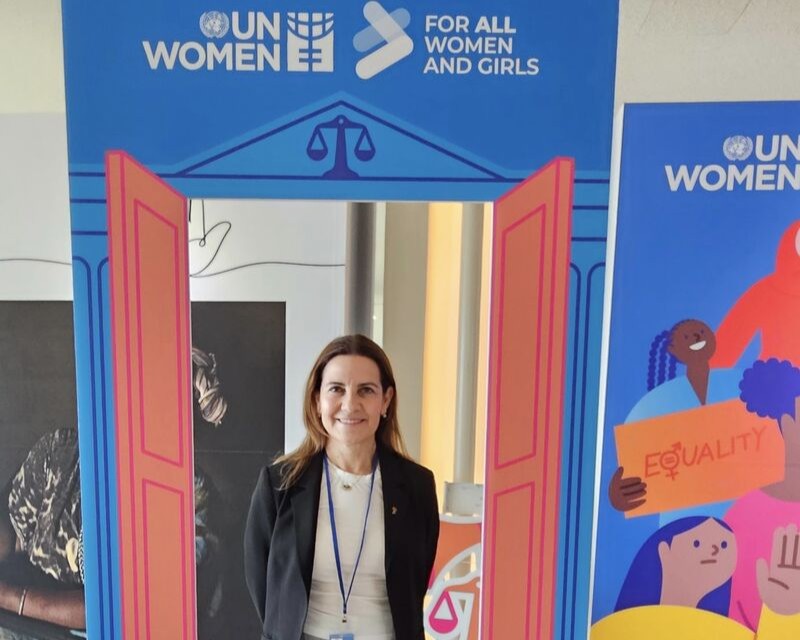
A Global Conversation with Dilek Karabucak

Few individuals embody global citizenship as fully as Dilek Karabucak. Over the course of her international career, the Turkish-born leader has worn many hats, all connected by one central purpose: creating meaningful connections across cultures.
At the Philadelphia Committee on Foreign Relations, she supports dialogue about world affairs. As Vice President and Director of Membership for the International Women's Club of Philadelphia, she promotes female friendship by celebrating differences. Through her work as a producer for WRDV Radio's I Hear America Talking and Tours and Detours, she shares stories that reveal the people and places behind history and culture.
As she completes her first year as Association Manager for the Consular Corps Association of Philadelphia, Karabucak reflects on what it takes to build trust as a foundation of strong relations. In this interview with Global Philadelphia, she reveals how Philadelphia's global character emerges from stories of its residents.
You grew up in Istanbul and have called Philadelphia home for nearly 30 years. How have these two cities shaped who you are, both personally and professionally?
Philadelphia has been my home for 33 years; longer than I lived in Turkey. I no longer feel as though I live between two worlds. Fortunately, I feel that I belong to both. Istanbul gave me my roots and my curiosity about the world. It is a city where Asia and Europe meet, bringing together cultures, religions, and centuries of history. Growing up there taught me that people and places are complex and rarely defined by a single identity. Additionally, respect for languages and world cultures was an important part of my upbringing.
Philadelphia became the place where I could put my international background into practice. A cooperative program brought me to Drexel University, where I completed a Master of Business Administration with a double major in international business and marketing. Philadelphia has taught me something about belonging. When you begin a life in another country, you understand how meaningful it is when someone welcomes you, explains an unfamiliar system, or makes an introduction. The values of civic participation, volunteerism, community, and strong institutions have become important parts of who I am. I do not use those words loosely. Mayor Cherelle Parker and Governor Shapiro genuinely want to make Philadelphia special in that way: welcoming and inclusive. That is why it became my home.
What international destinations have you visited recently, and which have left the greatest impression on you?
Thinking about traveling gives me a lot of energy, because I try not to see myself as a tourist; instead, I want to experience each place as a local would. One of the last places that left a particularly strong impression on me was Machu Picchu in Peru. Seeing what the Incas accomplished, and encountering the remains of such an extraordinary civilization, was incredible. As a UNESCO World Heritage Site Machu Picchu reflects the Incas' remarkable achievements in architecture, engineering, and land use. What struck me most was the way the Inca legacy continues to shape the people of Peru, how proud they are of it and how they share it with the world. I felt that I was learning from their knowledge. Being there and experiencing it firsthand was mind-boggling.
Throughout your career, you've worked across business, diplomacy, nonprofit organizations, and media. While these fields may seem quite different, a common thread throughout your work has been bringing people together. Was there a defining moment when you realized that building connections across cultures would become your life's work?
Because of my family background, my Francophone education, and my travels, I developed an international perspective at an early age. When I look back at my career, I can see that its essence has always been the same. I genuinely care about people and their stories. In each of my professional roles, I have found myself listening closely to people, connecting with them, and helping them work toward a shared goal.
This also means going into neighborhoods and engaging directly with residents. When you understand where someone comes from and what matters to them, it becomes much easier to build trust. My work has always been about building that trust, which is essential to creating genuine connections. I saw this clearly, for example, when I worked for the Geographical Society, where the focus was on connecting people through a shared desire to learn more about other cultures. Eventually, I realized that this was not simply part of my work, it was part of who I am. Perhaps that was the defining moment: recognizing that I needed to stay true to myself, remain authentic, and embrace who I am.
You recently completed your first year as Association Manager of the Consular Corps Association of Philadelphia, the oldest consular corps in the United States. How do you define the role that the institution plays in the city?
This first year has been a great honor and a pleasure, as well as a tremendous learning experience. CCAP is the oldest consular organization in the country, and one of the institutions responsible for maintaining some of Philadelphia's longest-standing international relationships and connections. The Consular Corps supports career and honorary consuls while connecting them with leaders in government, business, higher education, cultural organizations, and economic development.
This work is particularly important because Philadelphia's geographic location makes it strategically significant. We help facilitate these relationships and translate diplomatic connections into educational, scientific, civic, and economic exchanges that benefit all the countries represented. I am proud to help carry out this work.
Much of your work happens behind the scenes through organizations like the Consular Corps Association of Philadelphia and the Philadelphia Committee on Foreign Relations. How are these organizations important to the city's status in global networks?
Both the Consular Corps Association of Philadelphia and the Philadelphia Committee on Foreign Relations help strengthen Philadelphia's place in global networks, but they do so in different and complementary ways. CCAP connects the city directly with the international diplomatic community, while PCFR, as a membership organization, creates a forum for informed discussion on international affairs. Through off-the-record conversations with diplomats, scholars, journalists, and business leaders, the organization allows members to move beyond the headlines, ask questions, and gain a deeper understanding of political, economic, and other global issues.
We also support many of Global Philadelphia's initiatives. Helping Philadelphia become the first World Heritage City in the United States, for example, demonstrates how collaboration among organizations can transform the city's extraordinary heritage into international recognition, education, civic pride, and greater global engagement. Together, CCAP and PCRF help build relationships, exchange ideas, and keep Philadelphia engaged with the wider world.
As Vice President and Director of Membership of the International Women's Club of Philadelphia, you help lead a community of "women making a difference through the power of friendship." How has the network resulted in new and valuable connections for you as an individual or for your organizations?
The International Women's Club of Philadelphia is a community of approximately 200 women from 40 countries, and we are very proud of this institution. It demonstrates how friendship can become a meaningful form of community support. Women arrive in Philadelphia with different languages, professional experiences, family circumstances, and cultural backgrounds. When we come together, we share our stories, about our families, how we solve problems, the institutions we discover, the museums we visit, and the books we read.
We are also part of a larger umbrella organization called Welcome Clubs International. Many clubs like IWCP belong to this global network, which holds consultative status with the United Nations Economic and Social Council (ECOSOC). Since July, I have served as the liaison between the International Women's Club of Philadelphia and Welcome Clubs International. I took over the role from an extraordinary woman who served in it for many years. I will do my best to support our organization and contribute to Welcome Clubs International by helping more people learn about what is happening around the world.
You've described putting on your radio producer "hat" as a rewarding part of your journey, working on I Hear America Talking and Tours and Detours. If you could invite any cultural figure or international leader to Philadelphia for a radio interview, who would it be and what would you most want to ask them?
Ara Güler would be someone I would have loved to interview. An internationally recognized photographer and photojournalist known as the "Eye of Istanbul," he captured far more than the city's buildings and landmarks. His photographs documented Istanbul's people, working life, neighborhoods, and changing character, revealing the human stories behind the places he photographed. His work reflected a deep belief that the identity of a city is found in the lives of the people who inhabit it.
I would ask him how he earned the trust of the people he photographed and how he decided which moments and individuals should be remembered. Güler traveled and worked in so many countries, but he always seemed to carry a strong sense of where he came from. He often described himself as Ottoman, which I think says a lot about how he viewed identity not as one simple label, but as something shaped by history, culture, and many different influences. That stayed with me, because in many ways, it is how I think about being a global citizen.
Finally, I would ask him how he would photograph Philadelphia. What would he notice? Which people, streets, and everyday moments would reveal the city's character? What stories would he choose to capture, and how would he share them with the world?
What qualities make a city global, and how do you see those qualities reflected in Philadelphia?
A global city is more than a place that welcomes international visitors and residents, and more than a city that hosts major events attracting people from around the world. A truly global city is one where international engagement is part of everyday life. Thirty-three years ago, around Christmas, Philadelphia welcomed me as a graduate student. What impressed me then, and continues to impress me now, is the city's many strengths.
Philadelphia is rich in so many ways: an extraordinary culinary culture that reflects the many communities that call the city home; a passionate sports culture that brings together people from different generations and neighborhoods; and many international companies, particularly in its globally significant life sciences sector. It is also home to outstanding universities and medical institutions, a strong diplomatic community, and a diverse international diaspora. Its cultural and arts institutions, walkable neighborhoods, and coffee culture—dear to my heart—add further to its character.
Which of Philadelphia's strengths do you believe offer the greatest opportunities for the city's global future?
Philadelphia's greatest strength is its people. We have vibrant and diverse diaspora communities, strong civic institutions, and international leaders who all contribute to the life of the city. None of us can succeed alone, and that is why collaboration matters so much. "United Philly" is the mayor's motto, and with the energy and ambition we see from both Mayor Parker and Governor Shapiro, together with the commitment of Philadelphia's communities and institutions, I believe we can continue moving that vision forward.
We need to continue doing what we do best: welcoming people and strengthening our work with the Consular Corps, Global Philadelphia, and the many other organizations contributing in their own ways. Philadelphia is already growing and is on a strong path toward attracting more businesses and creating new opportunities. We need to continue supporting that growth so that we can welcome more international students, attract businesses and talented people, and draw great minds from around the world.