Washington Memorial Heritage’s Pat Nogar Invites Us to Witness “The Soul of Valley Forge”


Valley Forge National Park has long been a part of the Greater Philadelphia region’s national identity. The park, spanning 3,500 acres, commemorates George Washington and the revolutionaries’ fight for independence, and is visited by thousands each year. Across the road from the park sits Washington Memorial at Valley Forge, a 55-acre campus that includes the historic Washington Memorial Chapel.
Pat Nogar is the Executive Director of Washington Memorial Heritage, the nonprofit responsible for supporting and preserving the landmark, and has been a part of the church’s community for over 10 years. In a conversation with Nogar, she shared that she wants people to know that Washington Memorial at Valley Forge is a separate entity from the national park– with its own history, its own members, and its own funding.
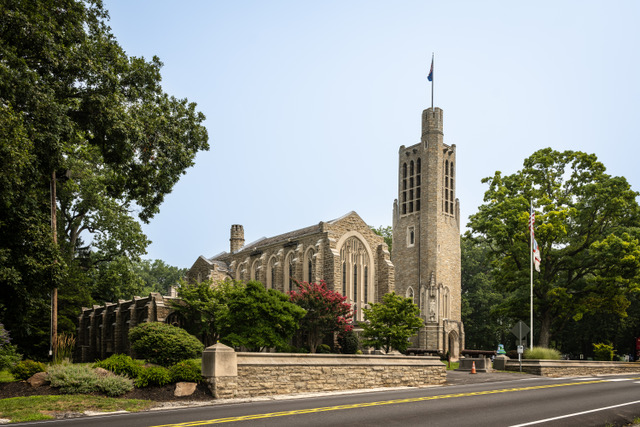
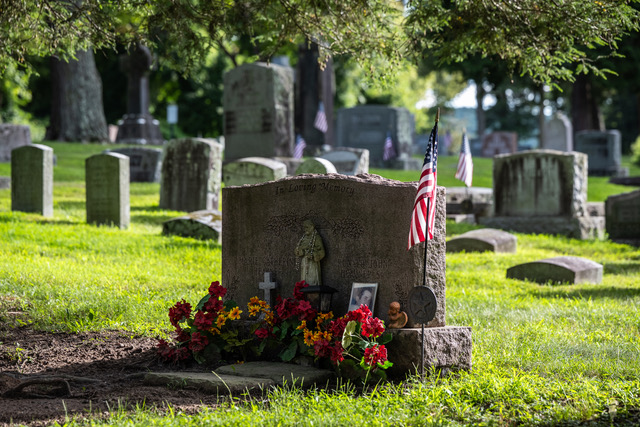
Washington Memorial Chapel is a part of the larger Washington Memorial at Valley Forge, as it was originally coined by its founder and first Rector, Father W. Herbert Burke, in the early 1900’s. In addition to the chapel, the campus includes cloisters connected to the chapel, Patriots Hall, a bell tower, a Civil War memorial, a 25-acre cemetery, and a century-old log cabin which acts as a cafe and bookstore.
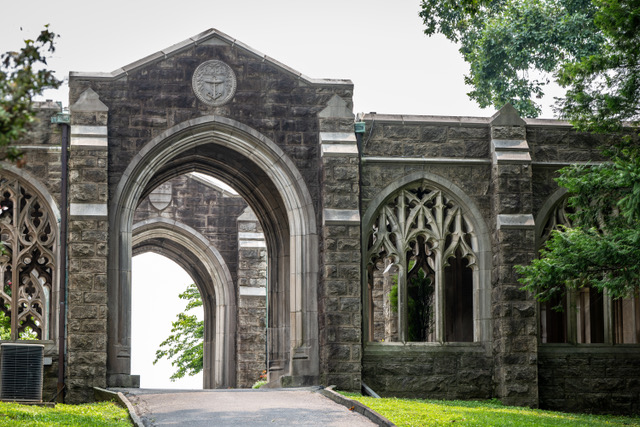
The Cloisters of the Colonies is a structure attached to the chapel with 13 bays in honor of the 13 original colonies. It features unique artisan work and surrounds a beautiful garden.
Patriots Hall is a site originally built as a place for locals and visitors to come together and discuss and honor the values upon which our nation was founded. The hall ultimately became a museum, as Father Burke was also the founder of the Valley Forge Historical Society and was passionate about continuing to share the history of the location. In fact, the museum once housed George Washington's tent that Father Burke bought from Martha Washington's family, along with other historic artifacts. Today, many of those items are now at the Museum of the American Revolution in Philadelphia.
Washington Memorial’s story extends past the Revolutionary War in many ways. The National Patriots Bell Tower was built with support from the Daughters of the American Revolution and was completed in 1957 after years of delay due to World War II. The campus also includes a Civil War memorial, Defender’s Gate. This structure honors veterans of the Civil War, and also sits at an entryway to the cemetery, its sections named after Revolutionary War generals.
Visitors can also pay their respects to other influential figures, such as Lucille Reeves, a Titanic survivor; Louis J. Nacke, a 9/11 hero; and Alexandra “Alex” Scott, a young girl who ran a lemonade stand for cancer research while she suffered through cancer herself and later inspired “Alex’s Lemonade Stand Foundation.”
At the time when the foundations for the Washington Memorial Chapel were being laid, the women’s suffrage movement was roaring on. Katharine Wentworth Ruschenberger was a member of the Pennsylvania Woman Suffrage Association and commissioned the Justice Bell to help in the campaign for women’s right to vote. An uncracked replica of the Liberty Bell, the Justice Bell became a symbol of the suffrage movement. Ruschenberger took the bell to all 67 counties in Pennsylvania and fastened the clapper so that the bell could not ring, representing the silenced voices of women who could not vote. When the 19th Amendment was ratified in 1920, the Justice Bell was finally rung in celebration. Today, the Justice Bell is on display at the Washington Memorial Chapel.
Nogar’s passion for these stories is clear. Her enthusiasm for the work that Washington Memorial Heritage does seeps into her descriptions of all they have to offer. “We try to bring out the human stories. We try to tell the world exactly what the heartbeat of Valley Forge is,” she proclaimed. And in order to keep these stories alive, the organization is taking on large projects in the name of preservation.
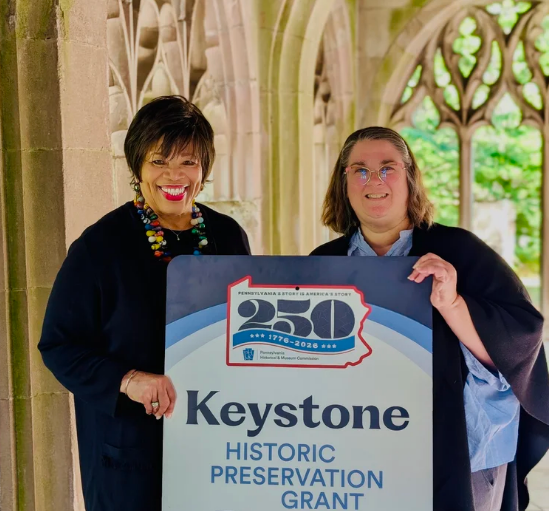
With the structures of Washington Memorial surviving over 100 years, preservation efforts are constantly underway. Washington Memorial Heritage took on renovations of Patriots Hall, which is now a beautiful venue, living up to the founder’s vision of a welcoming place to gather. The nonprofit is now turning its attention to the cloisters, where it has begun renovations to the roof and is launching a fund-raising campaign to restore the structure, which has suffered the ravages of time and weather.
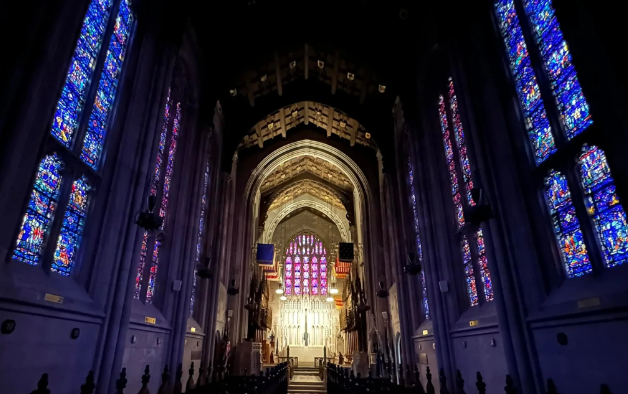
Another completed project is the restoration of the 13 stained glass windows inside the Chapel. Designed by artist Nicola D’Ascenzo, the windows depict the life of Christ, the life of George Washington, and the story of our nation. This merging of religion and national history– “A tribute to God and Country” as Father Burk described it– are part of what makes Washington Memorial at Valley Forge so unique. “The Chapel, along with the Bell Tower, Cemetery and other structures, symbolizes the story and the soul of our nation,” explained Nogar. “That’s why it is so significant.”
Not only is Washington Memorial open for tours and worship– they host events for partners and the public as well. Each year, French Alliance Day celebrates the key role that the French played in helping the revolutionaries declare victory. Nogar recounted the importance of the alliance: “We were losing the Revolutionary War and running out of resources. Benjamin Franklin made trips to France and convinced the French that they should assist us, and they did. So, every year, we lay a wreath at the French Alliance door, and a representative from the French ambassador's office in D.C. comes up to speak.”
Service to veterans is at the heart of Washington Memorial at Valley Forge and they are honored through various programs year-round. Annually, there is a commemorative service for those who died on September 11, including a procession to the gravesite of Louis J. Nacke II. The campus is also a local site for Wreaths Across America and other programs such as Purple Heart Day and services on Memorial Day speak to the reverence in which veterans are held.
One of the premier programs of Washington Memorial Heritage is its Annual Leadership Lecture Series. Highlighting military leaders from the Revolutionary War, the Series brings historians and award-winning authors from across the country to the campus. This year’s Series included eight speakers, with the last speaker scheduled for October 15. In the spring, the organization will host an exhibit and symposium, highlighting the world-renowned artisans who were central to the architectural and artistic significance of the Chapel.
In all, Washington Memorial is so much more than a historic chapel. “We are a 55-acre, thriving, vibrant entity that tells the story of this nation from a unique perspective,” shared Nogar. “We’re a lively Episcopal congregation that worships here and serves our Community. We invite our community to visit and enjoy the informative tours led by our docents, walk the campus, feel the stories, and immerse themselves in their significance.” Nogar concluded by noting that “One of our sayings is ‘History is Not Over.’ Today, on this campus, we continue to add chapters to the important story that Father Burke started in 1903.”


