Medieval City in Bavaria Celebrates 20 Years as a UNESCO World Heritage


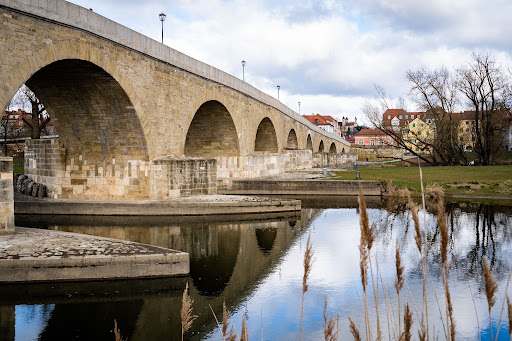
Crossing the 12th-century Stone Bridge over the Danube, I entered a city where more than 2,000 years of history remains remarkably alive. Regensburg is one of Europe's best-preserved medieval trading cities. This year, the Bavarian city is celebrating 20 years as a UNESCO World Heritage Site, marking two decades of preserving and sharing its extraordinary cultural legacy.
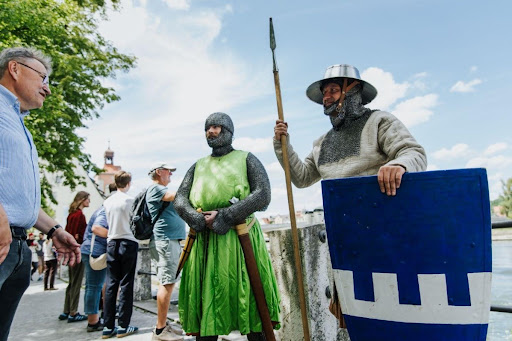
Unlike many historic sites preserved behind museum walls, Regensburg's UNESCO World Heritage Site unfolds as a living city, one where I found myself walking the same streets once traveled by Romans, pilgrims, merchants, and emperors. Cafés spill into narrow streets, visitors pass beneath Romanesque arches, and residents go about their daily lives in an urban landscape that has remained largely unchanged since the 14th century. Built predominantly in stone rather than timber, the city escaped much of the destruction that many historic European cities suffered during the Second World War.
The city's layout still reflects its origins as the Roman military camp of Castra Regina. In the Middle Ages, Regensburg grew into one of Europe's most important trading centers. Situated along the Danube, it connected trade routes stretching to Italy, Bohemia, Russia, and Byzantium, while also linking to the wider Silk Roads. Its wealth and influence made it a political center of the Holy Roman Empire, hosting Imperial Assemblies and later serving as the seat of the Perpetual Imperial Diet. For nearly 150 years, princes and representatives from across the empire gathered here to negotiate laws, approve taxes, and resolve disputes, reducing the need for constant travel.
Two Decades as a World Heritage City
In 2006, UNESCO recognized Regensburg's key role as a medieval trading hub and its exceptionally well-preserved urban development, inscribing the Old Town and the adjoining district of Stadtamhof on the World Heritage List. As I wandered through the city, I encountered nearly every chapter of its history: Roman remains and Romanesque churches, medieval towers, Gothic landmarks, and the iconic 12th-century Stone Bridge, a masterpiece of medieval engineering and Germany's oldest surviving stone bridge. Together, these landmarks span an area larger than 444 acres and include more than 1,000 listed historic buildings.
To better understand what UNESCO recognition has meant over time, I reached out to the city. Dr. Matthias Ripp, Regensburg's World Heritage Coordinator, recalled the years following the inscription in 2006: "It was the biggest topic at the time. The public and the media created a real buzz. People were incredibly proud that their Regensburg now stood alongside places like the Taj Mahal."
UNESCO World Heritage inscription has helped preserve, restore, and open major historic monuments to the public. One example is the 9th-century Niedermünster Abbey, once one of the most powerful and wealthy religious foundations in medieval Bavaria. In addition, after a decade-long restoration, the city's iconic Stone Bridge shines in renewed form.
Walking through these sites, I found that Regensburg itself feels like an open-air archive, but there are also many ways to engage more deeply with the city's past. Visitors can attend free organ concerts in the cathedral and be captivated by the magic of its Gothic architecture. Guided tours and museum spaces, such as the "documente" sites across the city, offer immersive insights. The World Heritage Visitor Center, welcoming more than 200,000 visitors each year, highlights key moments in the city's history and its role in trans-European trade and governance.
In 2021, the Danube Limes became the city's second UNESCO World Heritage Site. As a former Roman military frontier, the Danube Limes stretched about 1,250 miles, running through eight European countries and serving as protection against Germanic and other tribes. Germany is home to 55 UNESCO World Heritage Sites. Other German cities with UNESCO-listed historic centers include Bamberg, Lübeck, Quedlinburg, Stralsund, and Wismar.
World Heritage Without Borders
Regensburg maintains longstanding ties with the United States. During the nineteenth century, many people from the region emigrated to cities such as Philadelphia and New York and to communities across the Midwest. Today, those ties continue through international business links and academic partnerships through the University of Regensburg. The city coordinates the Organization of World Heritage Cities (OWHC) Young Travelling Program, which gives students the chance to experience World Heritage Cities and cultural heritage firsthand.
"Cultural heritage only has value if it is meaningful to people," says Ripp. "That is why we work with schools, university students, senior citizens, through social media, and on a wide range of projects to communicate that value." Looking ahead, Ripp says Regensburg will continue to reinvent itself as it protects its 2,000-year-old urban heritage in the face of climate challenges.

Sources
Cover photo: ©Stadt Regensburg ; https://regensburg-tourismus.gmbh/das-machen-wir/pressebereich
https://whc.unesco.org/en/list/1155
https://www.regensburg.de/museen/die-museen/documente
https://tourismus.regensburg.de/en/experience-discover/art-culture/document-niedermuenster

