A Global Conversations with Sharmain Matlock-Turner


Polarization has become the background noise of public life, and Sharmain Matlock-Turner has spent her career doing the opposite. For over twenty-five years, she has sat with government, business, philanthropy, and neighborhood leaders at the same table to build solutions and find common ground. She doesn’t ask people to give up what they believe, but rather she asks them to listen, to find the thing they share, and to say “and” instead of “or.”
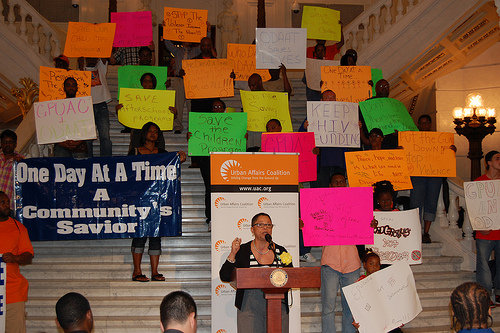
Sharmain Matlock-Turner has served as CEO of the Urban Affairs Coalition since 1999 and is the first woman to hold the role. Her specialty is building structure around good ideas so they outlast the applause. Her approach comes down to a choice she describes in this conversation: you can moan and groan, or you can organize. Under her leadership, the UAC does exactly that. The Coalition focuses on improving life chances for youth and young adults, building wealth in low-income communities, forging strategic partnerships, and strengthening the nonprofit sector through fiscal sponsorship. In its 57-year history, UAC has managed more than $1 billion in public and private funds. Matlock-Turner is also co-founder and President Emeritus of the West Oak Lane Charter School and a founding member of the National Network of Fiscal Sponsors.
Global Philadelphia Association is proud to honor Ms. Matlock-Turner with the Lifetime Achievement Award at the 2026 Globy Awards, to be held on Monday, December 7, at the Ballroom at the Ben. The Globys recognize individuals whose work elevates Greater Philadelphia and attracts the world’s attention to our city. In this Global Conversation, she reflects on growing up in West Philadelphia, building trust across divides, the sponsors who opened doors for her, and the work she still sees ahead.
Jessica Barber: You’ve described yourself as just a little girl from West Philly. So if that little girl could meet the woman who’s receiving the Lifetime Achievement Award this December, what do you think would surprise her the most?
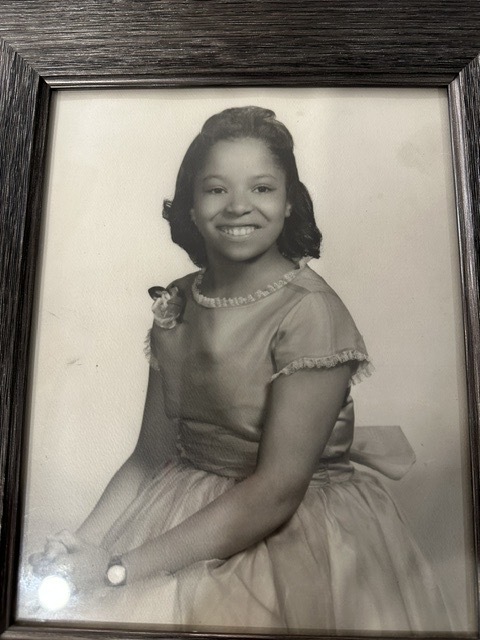
Sharmain Matlock-Turner: I think, number one, she would say, “Wow. Go ahead, girl, with your bad self.” She knows I’m always trying to do my best and work really hard, but I think she would be surprised by some of the rooms I’ve had the opportunity to enter. The fact that Governor Josh Shapiro actually knows me by name, I just can’t imagine she would ever have thought that was possible.
I think it comes down to the fact that I’ve had the opportunity not only to be an important part of the grassroots, but also to be a part of the grasstops, without losing my real connection to my community and the people there. That’s why I describe myself as a little girl from West Philly. I never forget where I come from, because that’s what I always want to make sure I’m bringing, no matter what room I ultimately go into.
To talk a little about when you were younger and choosing different trajectories: I read that you were considering running for office at one point in your career, but you instead chose the work of organizing communities. Can you talk about that decision and what drove you to the work you’ve been doing for the last twenty-plus years?
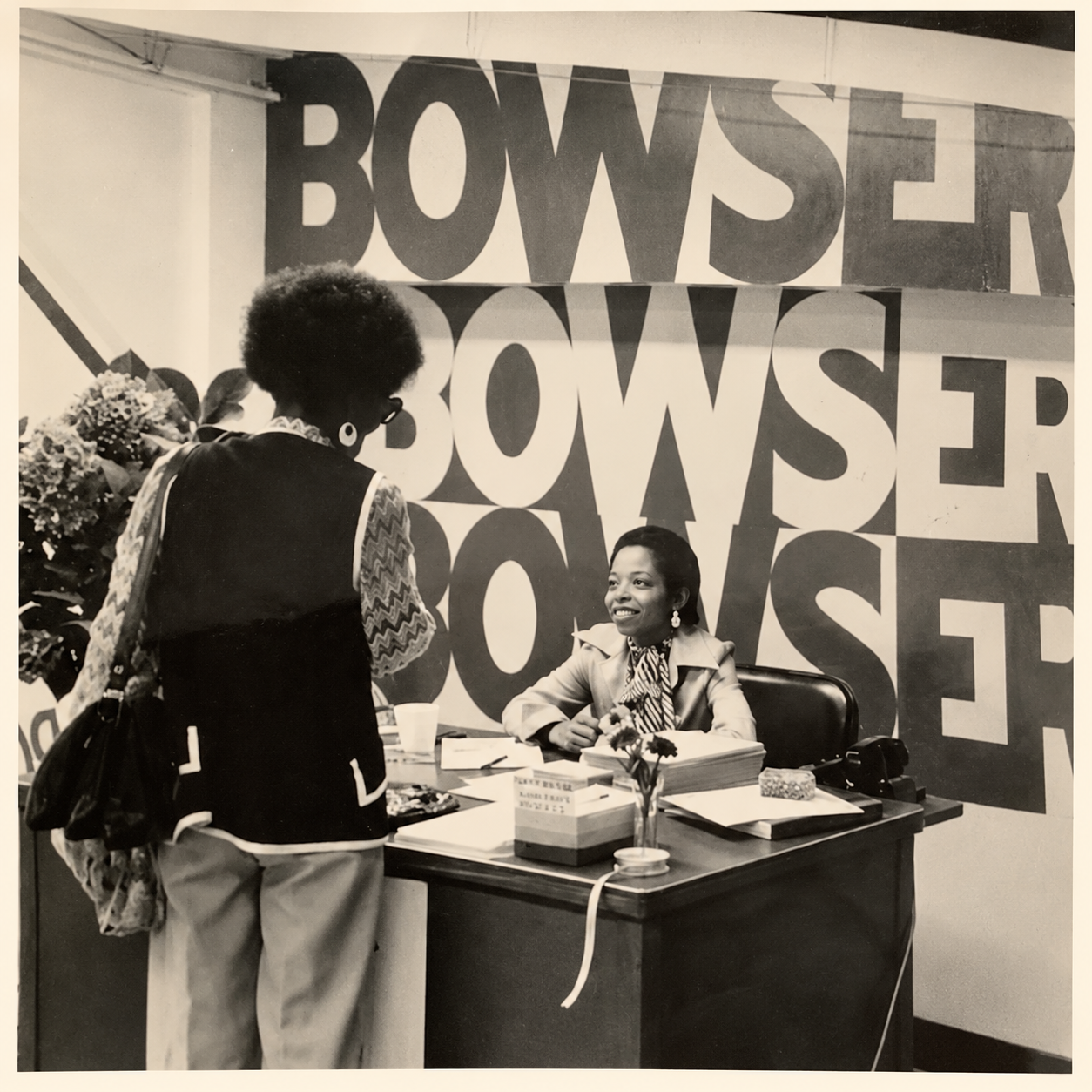
I’ve always had a real sense of driving social change. I worked in legislative offices and on campaigns. I worked on the election of Philadelphia’s first African American mayor, Wilson Goode, and I helped get my friend from high school, John White Jr., elected to the State House, which was my first real legislative, political job.
I found that people had really great ideas and could articulate them, but the real work happens when you build structure around those ideas to drive change. We had some really great groups, like the NAACP and the Urban League, but there were other grassroots organizations coming along that wanted to deal with community violence, or wanted to figure out how to raise money through employer-assisted campaigns, like what the United Way was doing. They wanted to do that in their own communities, and so I felt that being a part of building those kinds of organizations was very important.
Having government, business, and a strong civic community was absolutely critical to making sure our communities, especially grassroots communities, weren’t just knocking on the door saying, “Help us.” They were saying, “Look, we’ve got great ideas. We’ve got solutions. We have things we want to try.” And they were going to have the structure to manage those resources and bring that change about.
Throughout your entire career, you’ve been around people from very different backgrounds and perspectives who, more often than not, probably don’t agree with each other: government officials, corporations, philanthropists, activists, bankers. What have you learned about finding common ground without asking people to give up what they fundamentally believe, especially in a day and age of so much polarity in the United States?
To me, you can really connect with people if you’re really about trying to build trust, and you realize that I’m a person and that person is a person. I’m not just looking at their title, and I’m not just expecting them to look at my title. Listening is more important than talking. Really hearing people and trying to understand their perspective is very important. And then finding those connections. For example: Did you ever come to West Philly? Do you know anything about West Philly? Did you ever eat on 52nd Street? Do you know anybody who went to West Philadelphia High School? Finding things to connect around that aren’t necessarily, “Okay, the only thing we can talk about is this issue that maybe we have a different point of view on.”
Then, as you work your way through talking about issues, I find that there are very few ways people disagree as it relates to the what. Do we want people to be taken care of? Meaning that they have a place to live that’s comfortable, that children are educated and going to have opportunities for a productive life, that communities are going to be safe. If you ask people the what, you’ll find that most of the time they agree. Where we have the challenge is on the how.
When we get to the how, we have to be open to, “Okay, how do you see it, and why do you see the how that way?” And then ask them, “Let me share with you why my how is different, because of what my experience has said.” And is there any space in there for us to be “and” as opposed to “or”? Can we try this and this, test it out, and see what happens?
In 2022, four years ago now, you and other Black nonprofit leaders in Philadelphia wrote the report Reflecting Forward, essentially asking philanthropy to rethink the relationship between money and trust. So what would you say is the biggest thing philanthropy still misunderstands about the communities it’s trying to serve? And over the last four years since you wrote that, has the needle moved at all, in your opinion?
I think the needle has moved. I sit on the Philadelphia Foundation board. The Philadelphia Foundation helped fund that work, and they asked me to serve on the board because they really wanted to bring my voice, and this conversation, to the board level.
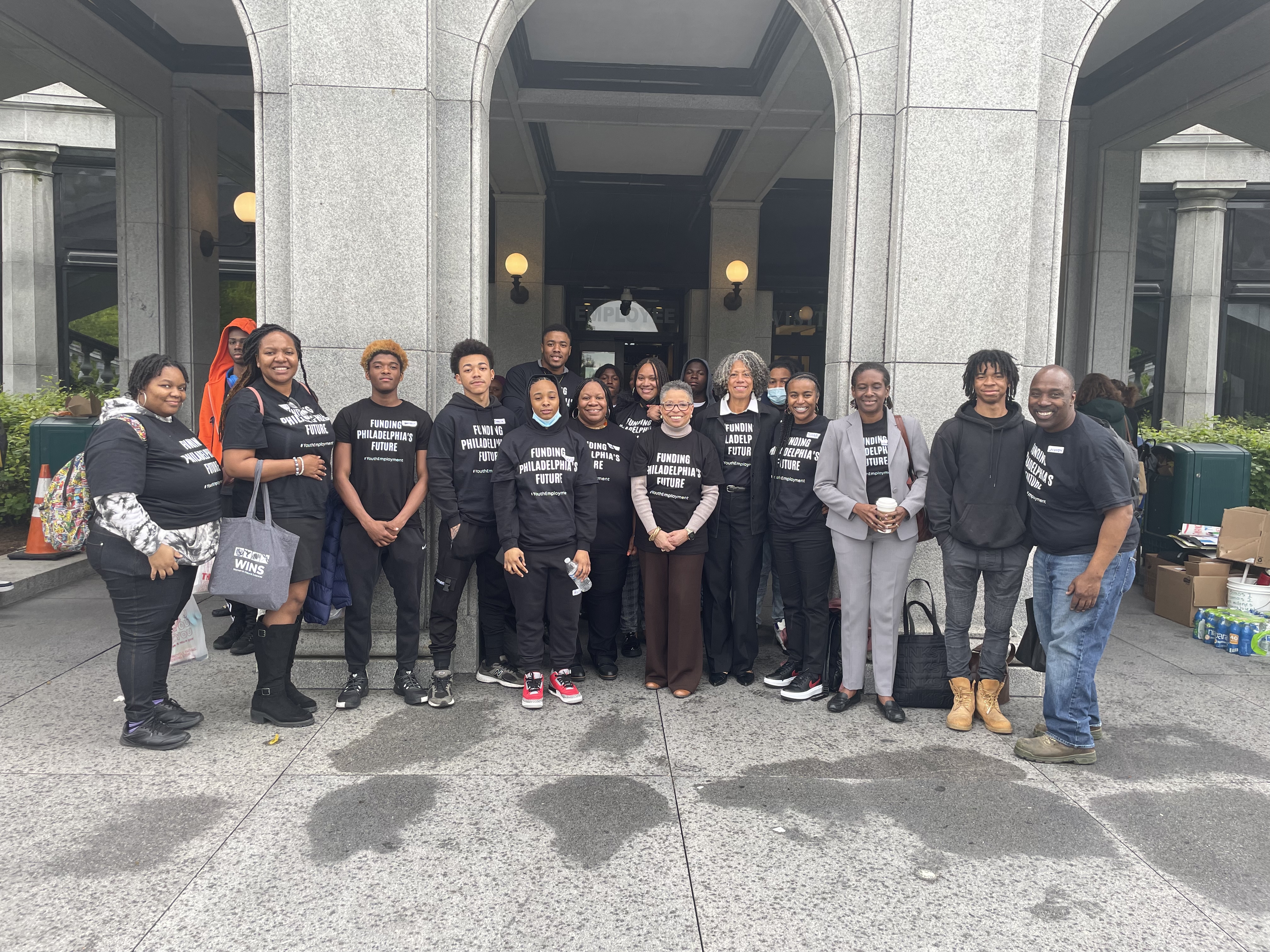
The United Way has brought in Kelly Woodland and the work of the Black Nonprofit Leaders Organization as part of the United Way’s network of initiatives. It’s about looking at where we didn’t agree. In the beginning, I would get together with my friend Kelly Woodland, and we would moan and groan. We’d talk about how people don’t hear us, they don’t see us, they don’t do what we hope they’re going to do. But after that we said, “Okay, how can we help them understand? First we’ve got to do the research.”
We went out and made sure we got a trusted third party to take a look at the data, to say, “This is not just Sharmain’s opinion, this is not just Kelly’s opinion or someone else’s opinion. Here’s the research to show that what we think we see and feel is accurate.” The research showed that it was true: there were competent, well-educated people with great, well-studied ideas, doing work in communities, who were having difficulty convincing the funder community that they could be trusted to implement their ideas. And the funder community said, ‘Oh, okay,’ and then started connecting with them through an organized process that brought the groups together. It took work on our part to make that happen.
So, a lot of times when you discover a challenge, as I said before, you can moan and groan, or you can organize and engage and build a structure, gather quality information, show results, and then continue the effort.
Right now, we have permanent funding for that group. That group meets consistently, we have an executive director, and we can keep the work going so it’s not, quote-unquote, “a one-and-done effort.”
There are so many times when reports are released, especially when we have so much information coming at us in this day and age. It’s great that the report actually led to something, and that you’ve seen concrete changes over the years. I think that’s super valuable.
And that’s me. The work I do is normally a part of driving change. Whether it takes a year or ten years, I’m going to be about how we drive change, not just about identifying something and giving a really great speech about it.
I’m sure that’s something you’ve evolved a lot throughout your career, in terms of finding the strategies, connecting the right people, and moving the needle forward. What is something you know now about leadership that you wish you had known when you first started your journey as the leader of the Urban Affairs Coalition?
One of the things I learned from the former executive director, Ernie Jones, and a good friend of mine, Chris Lewis, who used to be Secretary of the Commonwealth and is a great lawyer in the city of Philadelphia, was that if you’re on time, you’re late. Show up early. We talk about the importance of knowing people, meeting people, making relationships. Get there early, talk to people, get to know them, find out what their interests are and what they’re working on, so that you’re building those connections and relationships, which will ultimately build trust.
Now, a lot of times when people are gathering and they don’t see me in a room, they’ll say, “Oh my goodness, have you talked to Sharmain yet?” And someone will say, “Oh, I talked to so-and-so, and they told me if I was doing this, I needed to at least touch base with you.” That’s because I made sure I was there on time, which means early, and I put in the time to build relationships and connections, and what I committed to doing, I did. I didn’t say, “By the way, I’m going to do this,” and then not get it done. If I make a commitment, just like I’m going to be there, just like I’m going to make that introduction, just like I’m going to work on that program or project, I’m going to get it done.
That grew out of something I tell some of the people I mentor. I was working on the John White campaign, back in my twenties, and I was supposed to call people and get them to come out to the announcement. I kept saying, “I’ll get to it, I’ll get to it,” and then all of a sudden I realized I was two or three days away from the announcement and I had not... You don’t know anything about three-by-five cards, but I had not gotten out my three-by-five cards and gotten on the phone to call these people and get them there. I spent three days nonstop calling people, begging them to please come to this event. And I was so scared, when I got there, that nobody was going to show up. And there was not a seat in the house. People were standing outside trying to get in.
But what that taught me is, if you make a commitment, Sharmain, you have to stick to it. You should not have been in that situation. Did you ultimately have success? Yes. But it shouldn’t have been that way. You make a commitment, you follow through on it, you get it done. That’s the most important thing I learned from that experience.
I’m curious whether you have met and learned from leaders from other countries or other communities across the United States. Which of their approaches to poverty, youth employment, and community wealth have you wanted to transport and bring home to Philadelphia? And conversely, what do you think Philadelphia does well that it can export to the rest of the country, or to other places throughout the world?
I must admit I haven’t had an opportunity to spend a lot of time with people internationally, but within the United States I’ve had a chance to meet legislators and civic leaders from other parts of the country. One of the great lessons learned most recently is from the work I’ve had the opportunity to do with Pedro Ramos of the Philadelphia Foundation and Shawn McCaney of the William Penn Foundation and other civic and business leaders around reducing gun violence in the city of Philadelphia. A group of us said, “We don’t have to have the answer to this problem. Somebody else out there may have figured this out. Let’s go and try to find it,” as opposed to debating whether a gun buyback program is the right program to reduce gun violence, with someone saying yes and someone saying no. Let’s find a place where it works, where we’ve seen what’s working.
We got an opportunity to meet a young man named David Muhammad in California. He worked in Oakland, and he was able to reduce gun violence by looking at the system and structure and realizing that the gap was the intervention strategy. When we looked at Philadelphia, that’s what was missing in our strategy. We had prevention, and many of the programs I was working on were about how we make sure we can prevent young people from choosing that way of life. We know that if children can’t read, or they’re not doing well in school, or they don’t have a good career path... So I’m working on summer youth employment. I’m doing all kinds of things. I’m building new schools. I’m doing all of those things to try to create a positive pathway for the next generation. I also have programs helping those who are homeless, those who are experiencing difficult situations.
We found that the population most directly involved in gun violence was primarily men of color between the ages of 18 and 36, and our strategies were not focused enough on reaching them. We needed to get the public sector, the private sector, and government all focused in. And the number wasn’t huge. We were talking somewhere around thousands. We weren’t talking about millions. So again, going outside and looking in and saying, “Okay, what can we do? How can we do this better?” made a huge difference. Philadelphia has made significant progress in reducing gun violence.
There was also Howard Fuller, who did a lot of work around education. We were spending our time arguing about whether you could do choice in education, or whether, if you do choice in education, you’re against public education. So, I spent time with Congressman Dwight Evans, who at the time was State Rep. Evans, going to Milwaukee and talking to people who said, “Creating more opportunity is not about being against public education. It’s about hearing community voices and saying, ‘How can we make sure we can create choice within a system that supports all choices?’”
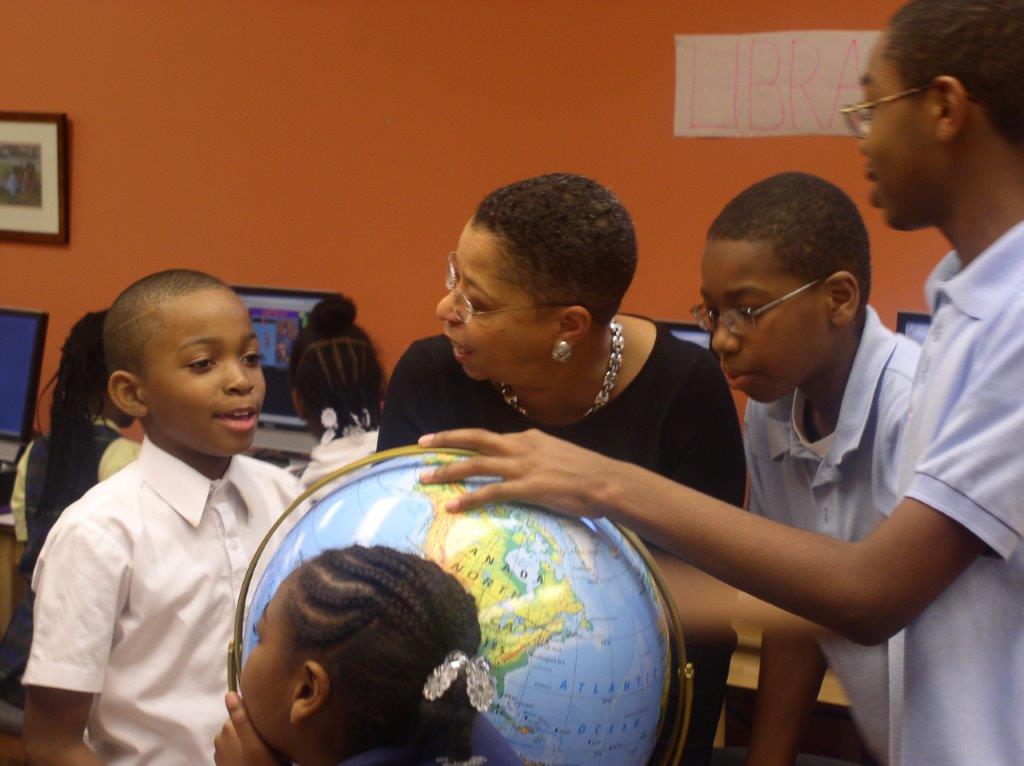
To me, that spoke to what I had seen sitting in legislative offices, where parents would come in and say, “Why is it that because I’m poor, or I don’t have political connections, I don’t have any choices? Only people who have money or know someone can get into Albert Greenfield downtown. I can’t ultimately have that choice.” I felt that wasn’t fair, that we needed to have choice. But it wasn’t just, again, about talking the talk. I said, “If this is true, then I’ve got to help start a school.” And that led to the creation of West Oak Lane Charter School, which I’m proud to say has been serving students for more than 25 years. We now have graduates who went on to college, became teachers, and returned to teach at the school. To me, that’s another example of being open to “and,” not “or.”
Changing the subject just a bit: you’ve been both a beneficiary and a builder of networks of women who open doors for one another. What do women today still need to do for one another that institutions alone cannot do?
I think, number one, women can certainly be advocates for one another, and certainly mentors, but we can also be sponsors. I loved when the conversation changed from mentorship to sponsorship, because women sponsored me. And men, too. But women really stood by me and said, “You know what? There’s this woman, Sharmain Matlock-Turner. You’re looking to replace Ernie Jones. Let me tell you who you should really consider. Sharmain Matlock-Turner is somebody you should talk to.” It was the wife of Ernie Jones, along with several other women, who said, “We think she’s the right person. You need to put her on the list.”
I’d never run a big organization before. I didn’t have the traditional résumé of having come up through the ranks that way, but they saw the work I had done in the community. They knew I was an organizer. They knew I had served on boards. They knew I had an understanding of budgets. And they knew I understood government, business, and community, and that those were critical skills. Councilwoman Marian Tasco, when I first got started, took me out with her and helped me learn how to knock on doors and get voters to come out and talk about what was important to them.
I have been absolutely committed to women, and to being a sponsor. There are women right now who own businesses, who are CEOs, who are in critical roles, and whenever I see them, I don’t have to say anything. They just say to me, “Sharmain, thank you so much for sponsoring me, for mentoring me, for supporting me, for betting on me.” And when people ask, “Sharmain, what is your biggest accomplishment?” That’s it.
After 25 years, a lifetime achievement award is, by definition, more of a backward-looking honor. But you still seem very motivated to keep going and to keep pushing the needle forward. What remains unfinished for you in the years to come?
I still think that experience matters. Being able to bring that knowledge of experience to problem-solving and program building is really important. I was at a meeting of a group called the Saturday Morning Group, and we were talking about economic mobility and how to move some of those things forward. I was listening to the conversation, and I could see one tier of the process that I thought was missing from the discussion. I brought it up, and at the end of the meeting people said, “Sharmain, you were absolutely right. As soon as you said that, I thought that was important.”
I believe that my experience, my ability to understand how things are interconnected, and my strategic thinking are things I can still bring to problem-solving. I can continue to support the broader community as we tackle economic mobility, fair and affordable housing for everyone, keeping our communities clean, green, and safe. There are also new challenges ahead, including understanding AI, what it will or won’t do, and how it will affect our world going forward, as well as how the next generation is going to connect to political power and structure that political power. There are things that are always going to be going on, and as long as I can be helpful, I will.
Now, I am going to try to spend a little more time with my family and a little more time with my friends. But I will still be a resource for my community, just like I’ve been since I was that little girl from West Philly.
