A Global Conversation with Philadelphia Poet Laureate Raina J. León, P.h.D.

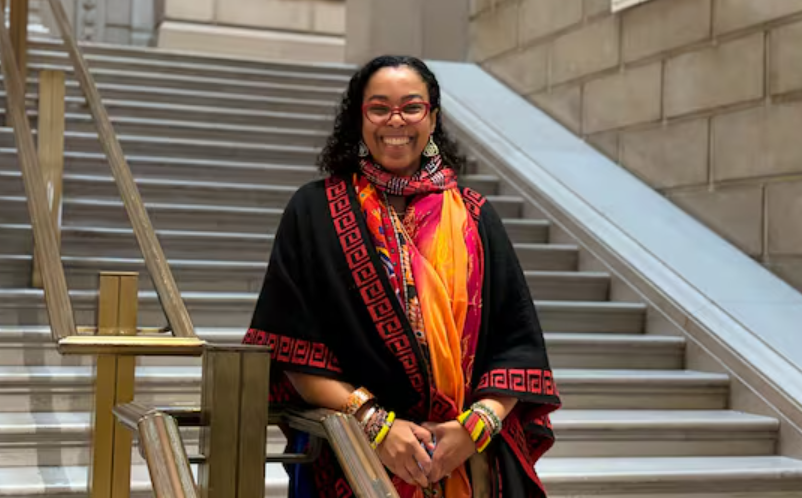
History can be captured through so many avenues– monuments, textbooks, and even artwork. For Raina J. León, art is not just about capturing a moment or expressing an idea. It is about creating living archives that speak to identity, community, and the ways in which we can learn from the past to move forward. León is an educator, an activist, a mother, a creator, and Philadelphia’s newest Poet Laureate. Her diverse and active participation in local and international art communities, as well as across art forms, promise exciting things to come for the laureateship.
León has produced 6 books of poetry, her latest installment being black god mother this body, which delves into themes of memory and identity. She is the founding editor of The Acentos Review, a publication sharing work by Latinx creatives, co-hosts a podcast, Generational Archives, where she shares strategies for exploring family ancestry, and co-hosts the Wild Indigo Poetry Reading Series. By forming new connections with organizations and supporting the development of art education in Philadelphia, León plans to expand her artistic and community involvement. Global Philadelphia had the pleasure of interviewing León as she dives into her new role in this Global Conversation.
Madi Costigan: As the new Poet Laureate of Philadelphia, you will be representing Philadelphia and our arts community. What messages do you hope to communicate about our city?
Raina J. León: Philadelphia is a city of vibrant arts practices and daring explorations across the arts. It is also a living archive. The city has witnessed Harriet Tubman and her traverses towards freedom, and we remember the work of abolitionists and how past community actions lend themselves to the strength of the community now and help us to imagine a future. The stories of what has happened here live on. That's Philly.
As Poet Laureate, it is important to think about the power of the poem to help us remember and to keep us in connection with our feelings in that remembering. We remember by activating our memory, but also to re-member, to put ourselves back together. I first encountered this idea through Dr. Cynthia B. Dillard’s work, a fellow scholar and educator.
It is our responsibility as community members to recognize our interconnectedness. A poem does that. Especially in this time of volatility, we need to remember that we're a community; we need one another. I’m excited about the work that I get to do and to be a part of the vibrant arts community that extends beyond the poem and the poet, and is interconnected with others who are experimenting across forms.
MC: You are a native Philadelphian and have reflected often on your upbringing in Southwest Philly and on Lenni Lenape ancestral lands. How has Philadelphia been a positive environment for self-expression and cultural inquiry for you?
RJL: Philadelphia is alive with great cultural abundance. There's so much vibrance and language. I came up in Southwest Philly, traveling across the city, discovering arts communities, and finding great food. Some of my closest friends growing up were from lots of different backgrounds, and mostly first- and second-generation immigrants. There was such delight in sharing our cultural backgrounds and asking questions of one another.
That early experience of observing, listening, and asking questions guides me well in translating that diversity of experiences into poetry. I am curious. I want to know about my people. Maybe you are passing through Philly or have lived here forever. Maybe you made a choice to be in this space or you didn't have a choice at all. Either way, you are my people.
MC: What organizations in the city have provided an opportunity for you to connect with other artists or you feel are doing valuable work in the arts community?
RJL: The Leeway Foundation, of course. I just received their Transformation Award, and I have attended their information sessions and seen how they have supported others. They are committed to holding space for people with such generosity and radical hospitality. The amount of time that they spend with people, the way they build people up and help them refine their artistic messages, and how they foster community beyond the application process is amazing.
I just received funding from The Velocity Fund. They bring creatives together to talk about what projects they are working on, which inspires folks to think about collaboration. I got connected with the Pennsylvania Academy of Fine Arts, which was a wonderful partnership and commission of various writers and musicians, and that opportunity also allowed for collaboration among artists. I first came to complete a commissioned work there through playwright and organizer, Josh A. Campbell’s vision. He’s now continuing incredible partnership programming at the Philadelphia Theatre Company.
Monument Lab also does wonderful work that inspires me for how they trouble the idea of a static, fixed monument. Imperfect Gallery is another beautiful community space. They once hosted myself and my child to experience the space to allow him to be engaged with the art in the way that he wanted. I also have such great admiration for all the work that they do in community and music as a small exhibition space.
I also love Painted Bride, which has a gorgeous project space that I’ve only just recently visited and now I’m often there. As a part of the role as Poet Laureate, one of my commitments is to be in partnership with community organizations. Painted Bride invited me to be a part of a festival this summer. With my focus on living archives and memory, I asked to be put in touch with people who hold memory in that community.
So, they connected me with Mrs. Cousar, who had been in the community since 1947 and lives a few blocks away from the art center. She was a beautician and crossing guard in the community and continues to be a beloved activist, now in her 90s. I want to be like her when I grow up! I got to learn from a community matriarch and now hope to translate that into some poems for this festival, as a way to give back to them for the invitation to be a part of their community. The work of this laureateship, to me, is about memory, and making sure that there are pathways to learn about one another. We know what we need for the future; we just have to remember that.
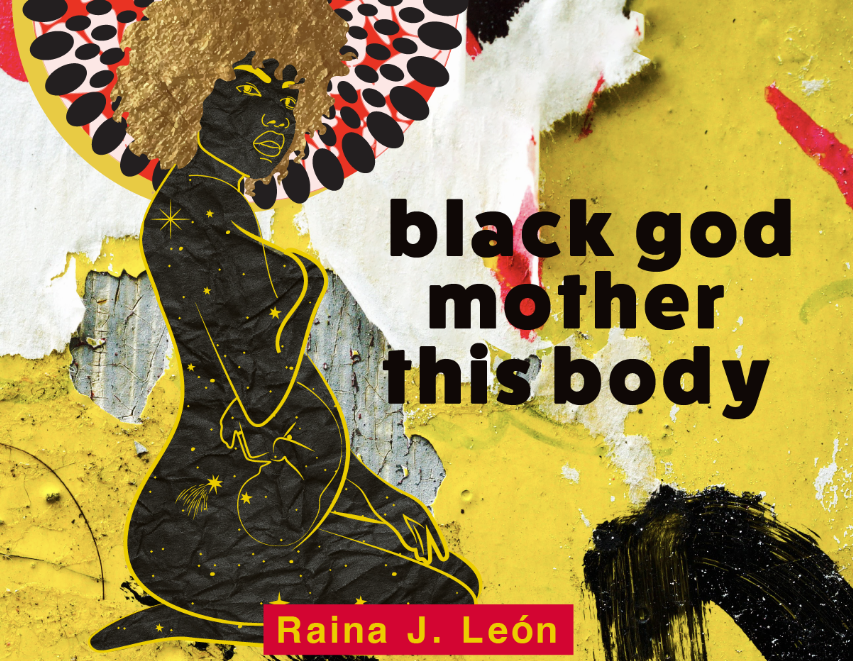
MC: Your most recent publication, black god mother this body, merges visual and written art forms and delves into your own identities and the identities of the communities you connect with. Can you explain what this specific publication meant to you as it was released to your audiences?
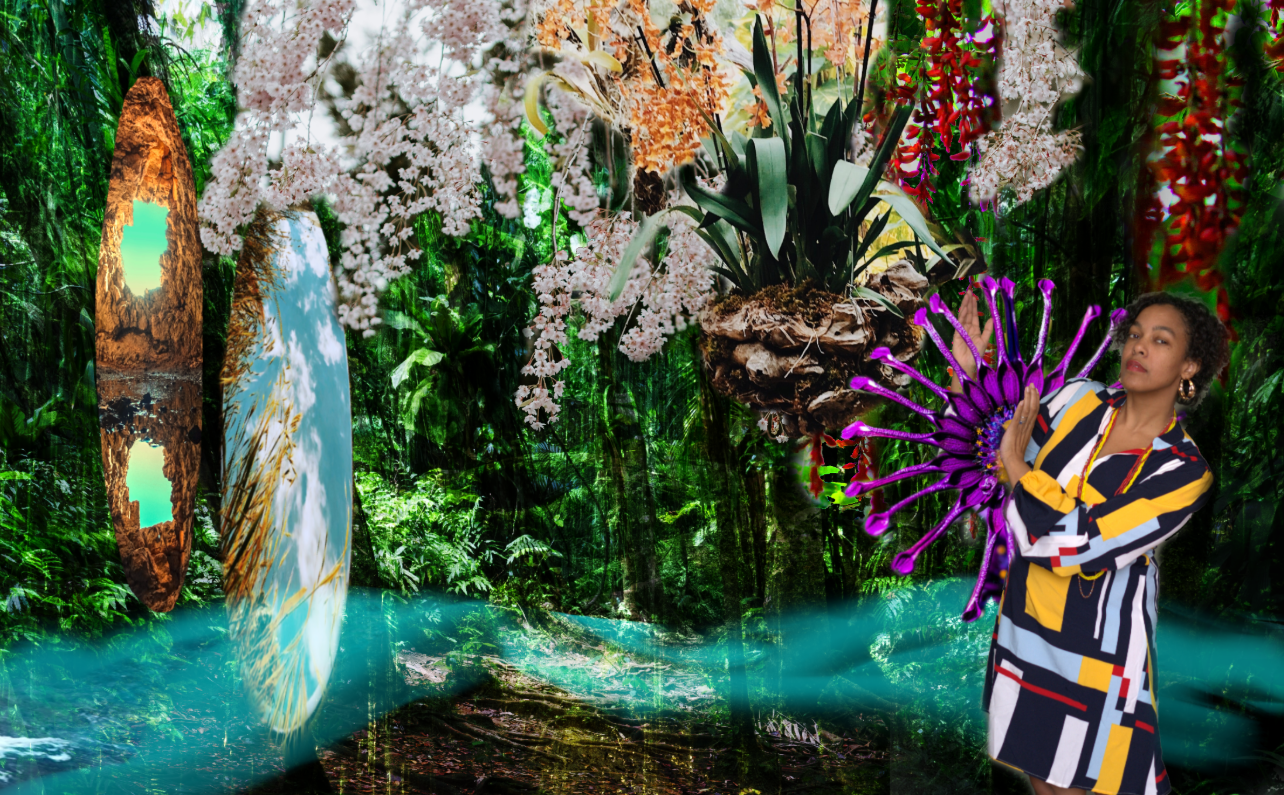
RJL: There are some things that are new – this book has a lot of visual art within it. I wanted the experience to not be fixed, but to be more immersive. So, the book has visual digital collages that are engaging with archive in some way. Each poem has a layer of augmented reality that can be accessed through an app. It might show a poetry film, a video of my family on the beach in Italy, or a related poem.
There are so many struggles within this book around wanting to be the best mother I can be. As a Black and Afro-Latina woman within this American context, I am engaging with the constant struggles around all of the facets of identity that I have, as well as pieces of history that still live within me. If I want to engage in a revolutionary mothering that allows my children to be free, I have to deal with my own history and biases. I also have to recognize that the world is scary sometimes and prepare my children for that, while also creating space for our joy because nobody should be able to take our joy away. That's what this book holds for me.
There is so much wonder, connection, and love within this book, even on the cover. Amy Law is a graphic designer and a friend of mine, and she created an image that incorporates texture from the neighborhood where I used to live and depicts a black mother goddess figure. There is so much layering within the book as a whole.
MC: You are a longtime educator, having been a Full Professor of Education at Saint Mary’s College of California, and now supporting writers in the Stonecoast MFA at the University of Southern Maine. Do you have any core tenets or messages that you wish to deliver to students?
RJL: I take great pride in having taught every grade level and every age from 5 to 90, and to have been a mentor along the way. As a creative writing professor, I negotiate between the craft or genre that we're engaging in and our responsibility to it, to ourselves, and to others within the community. A poet can be a poet if they have written two lines. What makes someone a dedicated poet is that they focus on every single part of those two lines: the syllables, the music of it, the symbols, and everything else that crafts those lines.
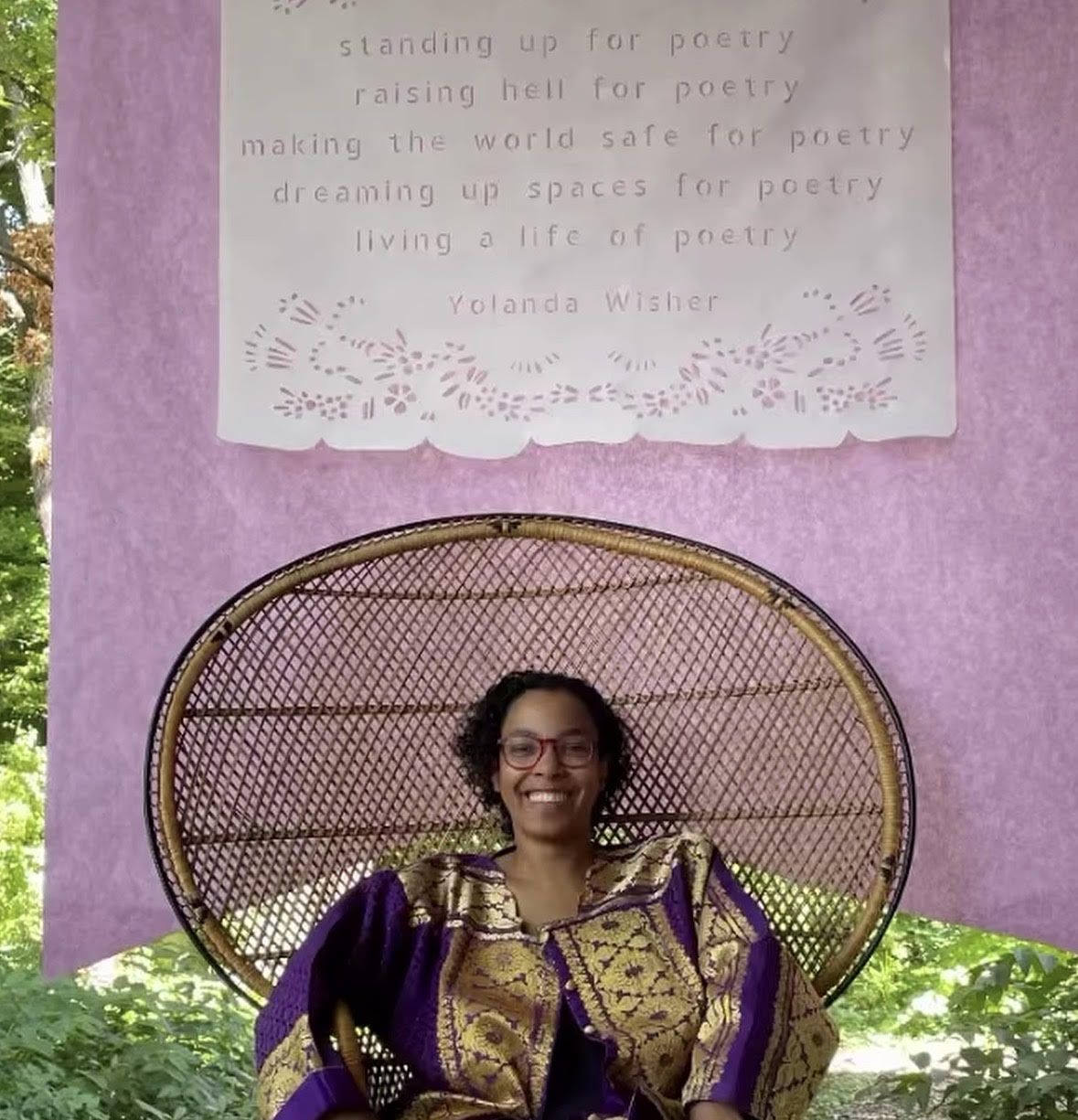
As part of my work as an educator of creative writers, I ask students how they are being accountable to themselves as an artist. I encourage them to learn, to try new things out, to go to new places. Creating is also living. We have to be interacting or taking action to experience the diversity of the world and the emotional vibrations within it. Art brings an experience forward and contributes to the community. Paying it forward might mean hosting a salon, creating a reading or publishing space, or just taking the time to go to someone else’s event and speak someone else’s name into a room. This takes time away from creating art, but it’s about giving back.
MC: You have represented the arts around the world by leading retreats and educating various audiences. Can you tell us about the benefits of retreats and residencies?
RJL: I am often faculty for retreats. Last year, I taught for CantoMundo, which is a retreat for Latinx poets. I'm going to be teaching with The Watering Hole, which is a retreat for folks of the global majority and takes place in South Carolina. A retreat involves a community gathering together with facilitated workshops, and a residency is generally self-catering.
Along with my husband, I founded residency spaces in Italy, one in Como and one in Lucca, Esperimento Sul Respiro. We provide a residence opportunity to peoples of the global majority who are creatives, healers, activists, or educators, for up to two weeks. They don't necessarily have to be productive during this time. There's no report to write at the end. The whole purpose is to rest and to be restored, especially for those groups who don’t get the time to do so otherwise.
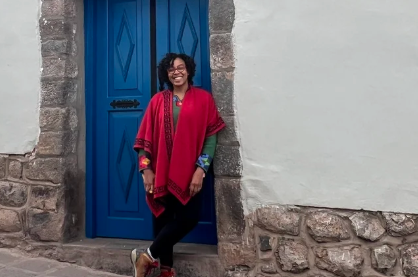
MC: What is your connection to Italy and why did you decide to take your experiences abroad? How has Italy been inspiring artistically?
RJL: My husband is Italian, originally from Como, and often goes back and forth between Italy and the United States. I had traveled there a lot before we met. We started to envision what it would be like to have a space that we could share with others so that they could also feel rested and restored. We were able to create those spaces in Como and Lucca.
Lake Como is gorgeous: the lake, the hikes, the food, fashion, and so much art; Lucca is very understated. Everyone who has ever been to Lucca speaks to how special it is. It is not far from Pisa and Florence. It is a beautiful walled city and it has a sense of magic in the air. The area around the city wall was turned into a park, there are massive trees around the historic center, and you can see out into the mountains and smell the fresh air. The food is wonderful and it has a fantastic music festival dedicated to Giacomo Puccini, one of the most renowned opera composers, who was born there and is also commemorated with a museum and statue.
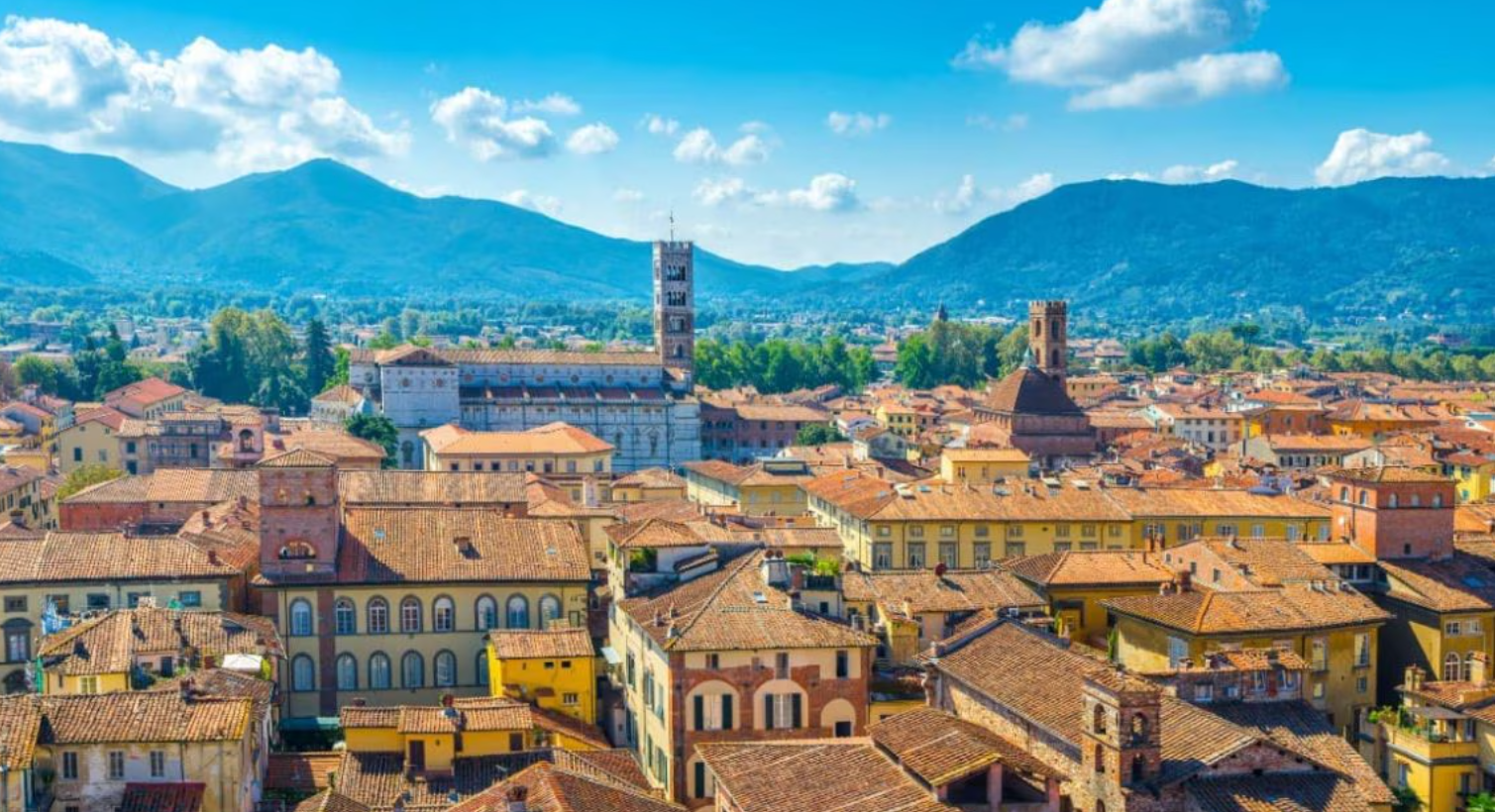
Though Italy is generally for connecting deeply with family, I also go myself once a year in my own DIY artist residency. I find the trickiest projects somehow unravel there as my mind is soothed by the sounds of church bells or seagulls. Having access to gelato and long leisurely walks whenever I want definitely helps the art too.
Photo credits
https://www.inquirer.com/news/philadelphia/poet-laureate-raina-leon-phi…
https://www.rainaleon.com/
https://blog.italotreno.com/en/travel-ideas/what-to-see-in-lucca/