A Global Conversation with Michael K. Pearson

A seasoned traveler and proven leader in global business, Michael K. Pearson has played a key part in boosting Philadelphia's status within the global economy. From establishing the multi-million dollar commerce startup Union Packaging to serving as CEO and revitalizing the services provided by Public Health Management Corporation (PHMC), Pearson’s impact in the corporate sector of Philadelphia has spanned decades.
Today, as Chair of PhilaPort, Pearson continues to influence the development of Philadelphia’s domestic and international economic strength, and will play a vital leadership role throughout their recently announced $837 million expansion. The 2026 Corporate Leadership Globy Awardee shared his thoughts on Philadelphia’s performance in the global economy and his experience as a leader in the following Global Conversation.
Could you share about the path that led you from founding Union Packaging to leading in PHMC and now chairing PhilaPort? What connects those different chapters of your career?
When I worked in corporate America in New York, I saw the opportunity to come back home as a social entrepreneur and form a business that could supply a route to solid, middle class jobs—that’s how Union Packaging was born. It exposed me to a supply chain that largely depended on international support for growth, which gave me the ability to compete with larger multi-nationals, because I was one of the few domestic importers that was generating finished products. We hired from atypical sources as a labor pool, whether citizens from incarceration, women returning to the workforce after being separated, or recent arrivals to the U.S. I found excellent talent by extending those opportunities.
Transitioning to a startup was impactful because I experienced entrepreneurial growth by confronting high risks and long hours. I had some angst about selling, but the legacy and the jobs I had created needed to be protected, so I eventually sold the company to private equity.
I was on the board for PHMC for close to 10 years. I was asked by the board to come in during a transitional period and contribute to righting the ship. The organization saw 163% growth during those years. More importantly, I had to make the difficult decisions of jettising programs that were no longer sustainable, so that other programs could exist in a social service spectrum. I also had to bring the discipline of financial planning and strategic planning to these purposeful careers in social services so that they could compete in a much more stringent physical environment to provide services. That was an example of a transferable skill—the numbers have to work whether in packaging or in human services.
I've also been blessed with the opportunity to serve on the board for Urban Engineers and Tompkins Board, which is no longer such a small bank but still has core values of being active in the community, and ensuring that it supports its fiscal mission with its social mission.
I appreciated your thoughts on leadership and how it can transverse sectors. You are earning the Globy Award for Corporate Leadership. Why have you gravitated towards leadership roles and how has mentorship been integral during your career?
Mentorship and advocacy can be formal or it can be informal. I've been blessed to receive that type of support, and have tried to give back in a similar way. I'm a former military officer, and as a young man, that formalized training, support, and guidance shaped me and gave me responsibility. I am a bronze star recipient, and I am most proud of that recognition because it was for leading people in harm's way and successfully managing risk. Once I did that, everything else in life became less intimidating.
Being able to manage under pressure can also be replicated in a corporate environment. We provide training, but more importantly, we give feedback on how we can help improve performance, and we give everybody an opportunity to improve their performance. The first obligation as a leader is to get people to that performance level. That's successful leadership.
Many Philadelphians encounter goods that pass through the port without realizing it—from fruit at the grocery store to cocoa used in chocolate. What would you most like residents to understand about PhilaPort’s role in their everyday lives and the city’s connections to the world?
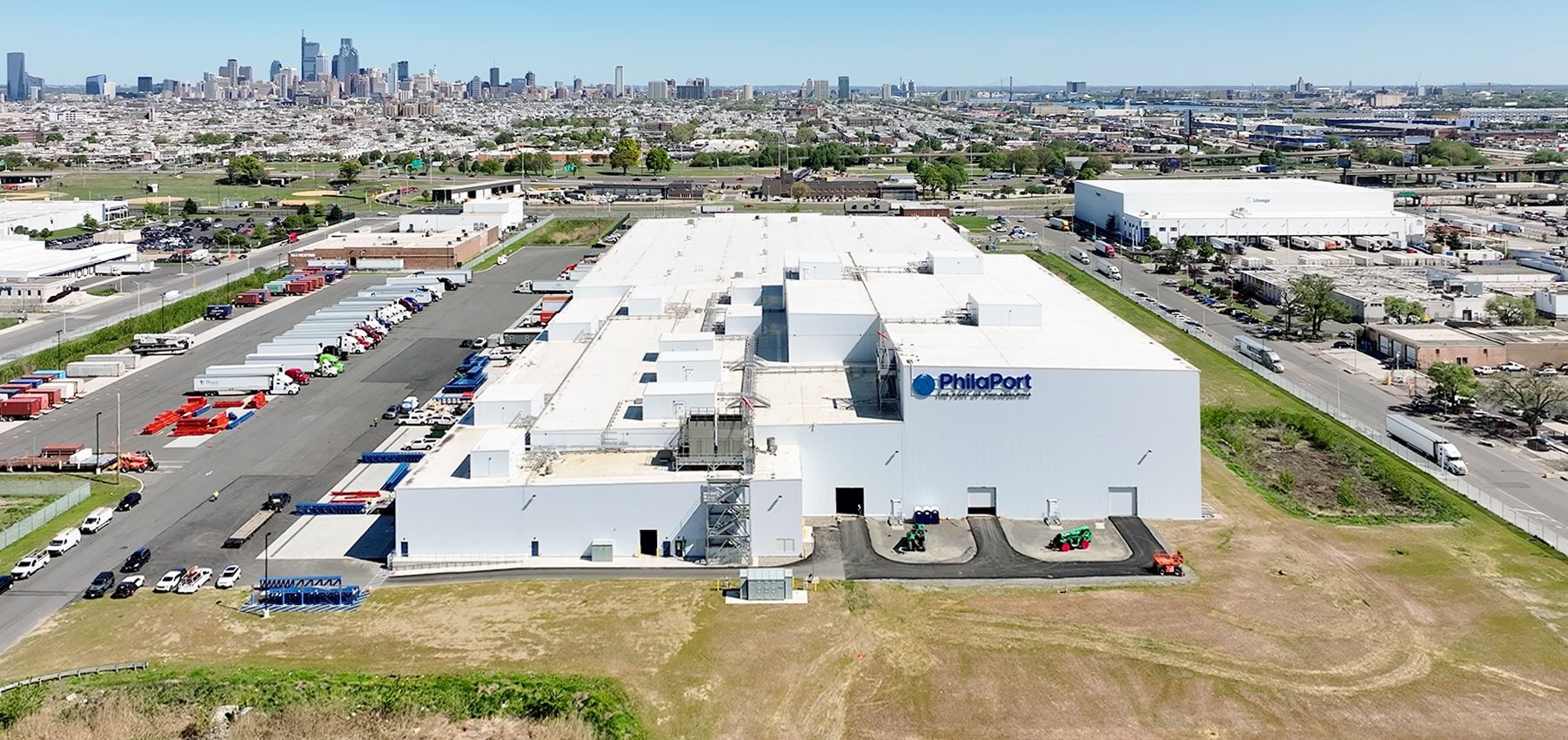
Our economies are global and that trend is continually increasing. And for us to be good citizens of the world, collectively and individually, it's important that we understand that and have cultural awareness. To quote Governor Shapiro, ‘We all eat bananas, but none of them are grown here.’ When we think about our role as the largest refrigerated facility in the United States, we support goods coming into the country. The port ties into each person’s breakfast, lunch, and dinner table—20% of what's consumed in the city is coming through that port.
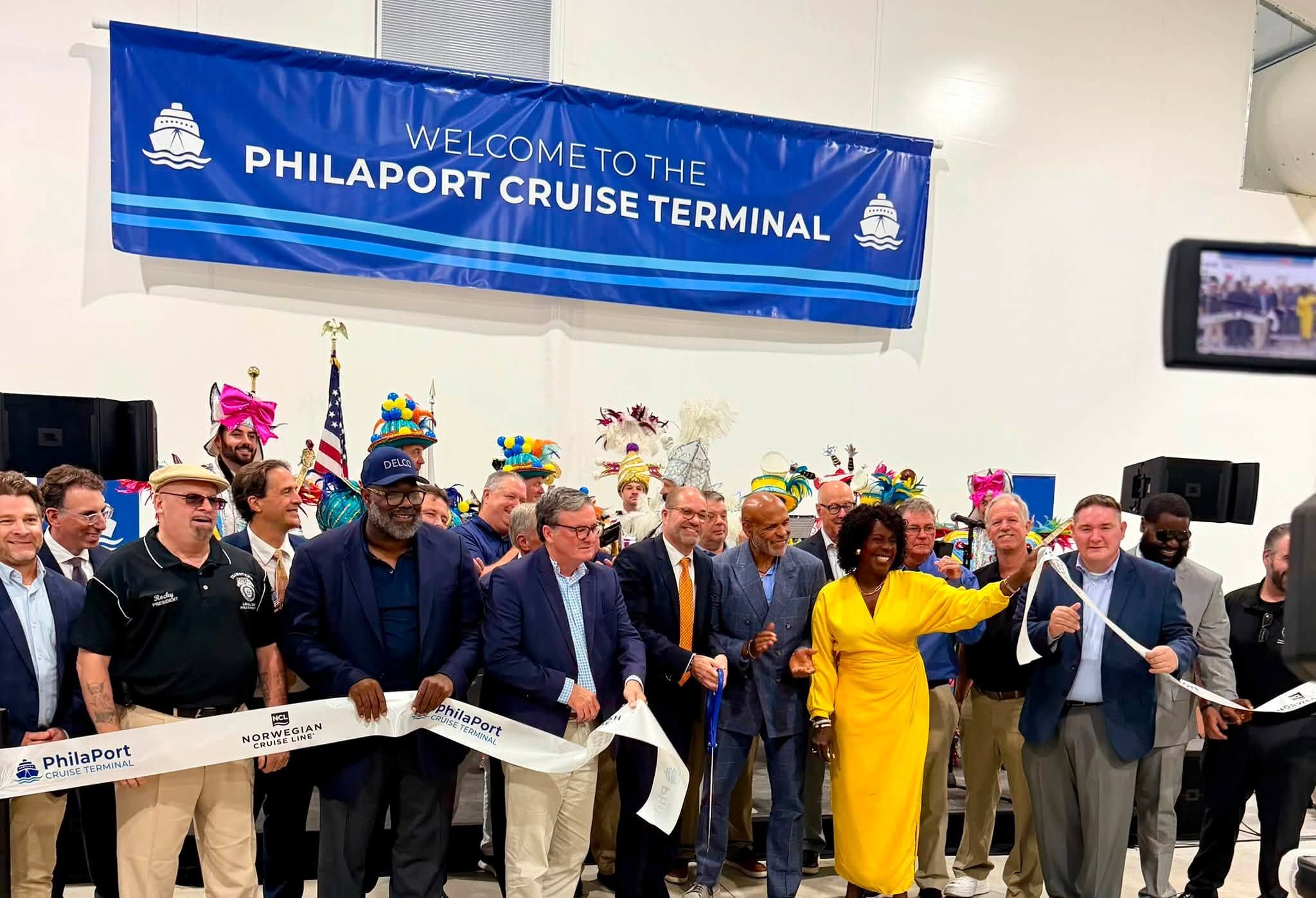
We’re the most efficient port in the United States, which is a testament to the labor unions that we work with. Efficiency means growth. That allowed us to bring back cruise ships and we will have 41 embarkments on an annual basis. More importantly, the economic impact is tremendous. The future growth of cargo is going to lead to jobs, stabilize the region, and make Philadelphia a better place to live.
We are collectively fighting against being the poorest major city. The only way we're going to attack that is to tie us to global opportunities, and we also need domestic growth. Our port will play as much of a role as our educational, medical, and technological institutions in solving these issues. To the average Philadelphian, that global perspective affects you on a daily basis. Also, it’s not only about bringing those products in, it's being able to afford the products through economic opportunity produced from jobs created from that activity.
You have traveled across six continents, visiting more than 50 countries and U.S. territories. Can you share how travel has shaped your perspectives?
Growing up, the importance of travel was embedded in me by my parents. That love for travel and understanding global perspectives fed into career opportunities and my continued personal interest in travel.
A traveler is well-informed on the human condition, and traveling opens up your perspective and appreciation, not only for the world, but of what you can do at home too. That comparative view, where you can see things turn around and built, shows that it’s possible to do great things and that we shouldn't limit our vision. I remember being in Abu Dhabi in the early ‘90s and returning about two years ago to see how much the infrastructure had developed. It’s inspiring and we need to see what we can do here in Philadelphia.
What are you most excited about in terms of the future of PhilaPort?
While we're the most efficient port in the country, the essence of the strategic plan is envisioning growth. 10 to 15 years ago, we were not doing quite as much cargo, and now, we're just under a million TEUs. Our plan calls for tripling that over the course of the set years identified in the strategic plan.
Now, what does that tripling do? It creates the need to build infrastructure, to support it. It also creates the stabilizing jobs associated with it. It also raises the imminence of the region, not just of Philadelphia but of South Jersey, Delaware, and Philadelphia, collectively, as an important place to do business. We also are integral to our national defense as one of the 14 ports identified as strategic.
If we combine the efforts of all of the companies in the South Philadelphia area, you are looking at the largest growth engine in the region. We have to build the infrastructure so we can accommodate, for instance, all of the surface transportation needed to support this. Electrifying the operations and cutting emissions of carbon are aspects that we want to continue to lead in, and we want to do it without interrupting the entertainment portion of that region so that everyone can go to see an Eagles or Phillies game and feel like they're not stuck in traffic. We want to be a part of that collective and a good neighbour in supporting the interests of the region.

