A Global Conversation with David Boardman

The way the public consumes news has changed drastically in recent years. Students joining the world of journalism need experienced mentors who encourage experiential learning and innovate teaching methods to keep up with these changes. This is where David Boardman, Dean of the Klein College of Media and Communication at Temple University, brings his expertise.
A nationally acclaimed leader in both investigative reporting and journalism education, Boardman has earned numerous awards, including the Goldsmith Prize in Investigative Reporting from Harvard University, the Investigative Reporters and Editors Award, and the Associated Press Managing Editors Public Service Award, and as the editor of The Seattle Times, he led four projects that garnered Pulitzer Prizes.
Since joining Temple University in 2013, Boardman has become an integral figure in both the educational and journalism sectors in Philadelphia, working to provide new opportunities for the next generation of journalists and media specialists.
Global Philadelphia is honoring David Boardman with the Educational Leadership Globy Award at the 2026 Globys. Boardman participated in a Global Conversation interview to tell us about his career pathway, his dedication to education and journalism, and his connection to Philadelphia and the world.
Madi Costigan: You were educated and started your career in the Pacific Northwest. Can you speak to what drew you to Philadelphia?
David Boardman: I certainly had an unusual path to higher education and to Philly. I grew up all over the country, including a stint in Chester County. I went to Northwestern University in Chicago and studied Journalism there with a minor in African Studies, so I've had an interest in international affairs for a long time. After Northwestern, I went directly to a volunteer program called Operation Crossroads Africa, where I worked on a construction project in Liberia. After that, I returned to the U.S. to start my journalism career.
I started on a little weekly paper in the San Juan Islands in Puget Sound. I picked up a master's degree at the University of Washington while I was working at the paper in Tacoma. I was then hired at The Seattle Times, and ultimately worked my way up to be the editor-in-chief. I loved that career until I didn’t, as leading a newspaper meant overseeing waves of layoffs and chasing nickels across the newsroom floor. I knew I was ready for something different, but still related to the mission of journalism.
I had been president of the council that accredits schools of journalism and communication, and wound up on a headhunter’s radar. That’s how Temple found me.
I fell in love with Temple almost instantly. I had been on many college campuses, but never one quite like this, in terms of the diversity, the energy, and the spirit. I also fell in love with Philadelphia. I was here for about a month when I wrote a column for The Philadelphia Inquirer that began, ‘Yo, Philly, I'm going to tell you something about yourselves that you might not want to know- You're nice.’ Despite its tough reputation, I’ve found this city and its people to be warm, friendly, and refreshingly genuine.
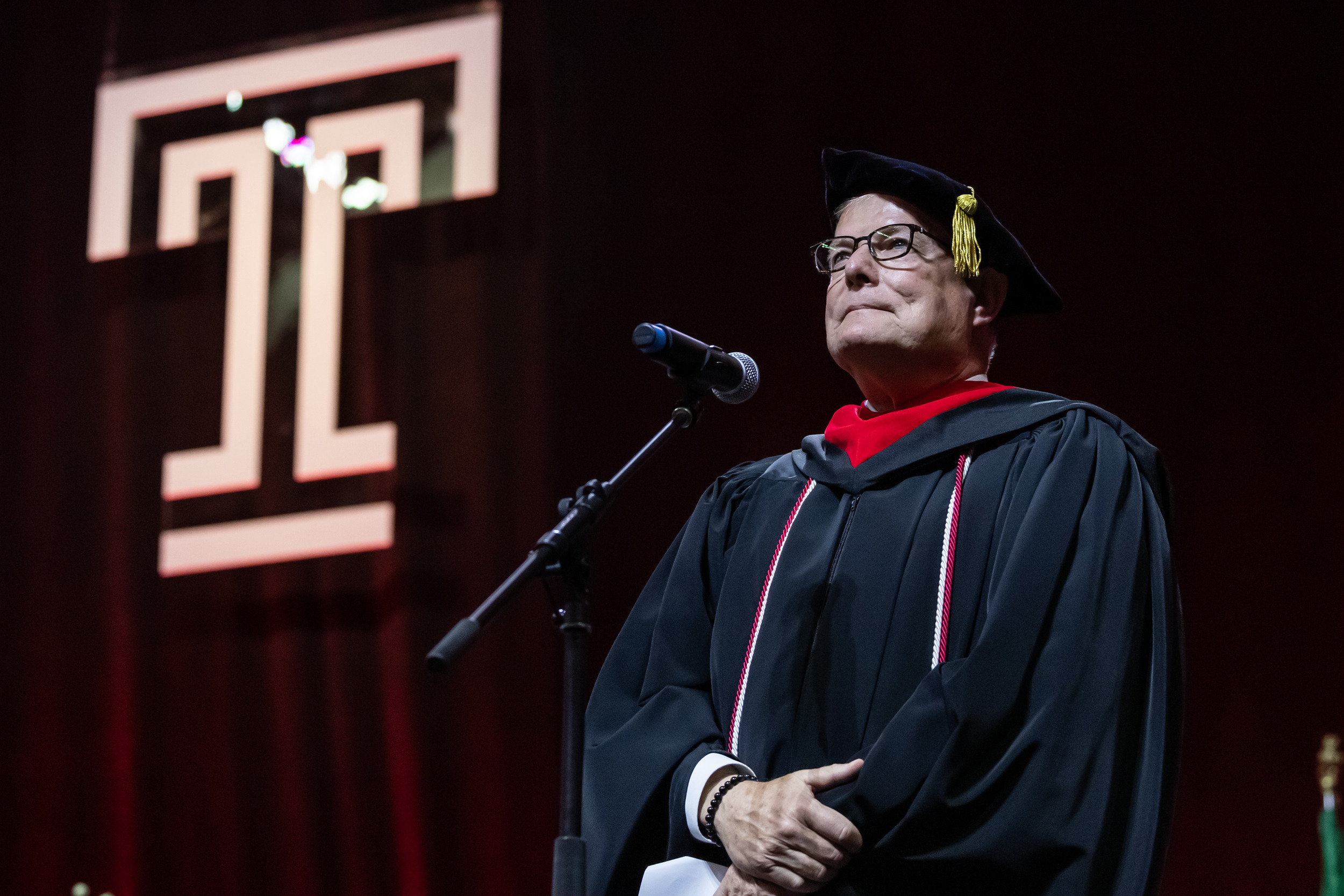
You have now been at Temple for over a decade. How has the Klein College grown in that time and what kind of learning opportunities are available to students?
First, when I got here the school didn’t have a name. Since 2019, it does, named for the pioneer of television and the great Philadelphian Lew Klein. Over the years, we’ve developed one of the best, largest and most innovative programs in the country. We have five departments – Journalism, Communication, Advertising and Public Relations, Media Studies and Production, and – starting next fall – Film and Media Arts. We also have majors in sports media and live entertainment production. We have multiple master’s programs and a Ph.D.
What really sets us apart from other programs is our connection with North Philadelphia and the
broader community. Through our Philadelphia Neighborhoods capstone class, our students
cover many sections of the city that otherwise get little or no coverage. We host the Philadelphia Journalism Collaborative, where our students provide content for more than 30 local news outlets. We started the Logan Center for Urban Investigative Reporting, where our students and faculty do significant investigative work that elevates the voices of communities. Our advertising and PR students provide services for local nonprofit organizations. As we like to say, our students learn it by living it. I'm very proud that the learning is having a positive impact in the community.
How did you become involved with the nonprofit sector in the city, particularly with The Lenfest Institute for Journalism, which is celebrating its 10th year?
I've been heavily involved not only at Temple and in the higher education sphere in Philadelphia, but also in the journalism sphere, and particularly where those two things intersect. Shortly after Gerry Lenfest donated The Inquirer and millions of his dollars to a new nonprofit that came to be known as the Lenfest Institute for Journalism, he asked me to become the founding chair. I’m enormously proud that the Lenfest Institute not only has helped put The Inquirer on solid footing, it has become a national leader in forging a viable future for local news.
I'm also the founding chair of Spotlight PA, which provides investigative and public-affairs news to more than 100 news outlets across the Commonwealth of Pennsylvania.
You have received countless awards over the span of your career. In what way does earning the Educational Leadership Globy Award hold a different meaning from earning those past awards?
I have tremendous respect for Global Philadelphia and Zabeth Teelucksingh, and was delighted to be part of the committee that succeeded in earning Philadelphia World Heritage City status. So to receive recognition from the organization is wonderful. As somebody who is a transplant, even after living here for 13 years, to have the city and these impressive people embrace me and recognize my efforts is truly rewarding.
One of the Lenfest Institute's missions is preserving democracy, and you are a key leader in guiding Temple students into the world of journalism. In a political climate where journalism and free speech are threatened, how do you encourage students and writers to maintain their investigative spirit and push back against obstacles?
Facts are at a premium right now, and the public is looking for fact-based reporting. There is no shortage of opinions out there and foundational reporting is being done by fewer people. If we're going to survive as a democracy, evidence-based journalism will always be necessary.
We have a particular focus at both Lenfest and at Temple on local journalism. So much of the division in this country is because people are consuming national news at a much greater percentage, which tends to be polarizing. With local news and local issues, people can come together in a much more productive and collaborative way. We are focused on helping students understand the value of journalism that matters and unites communities.
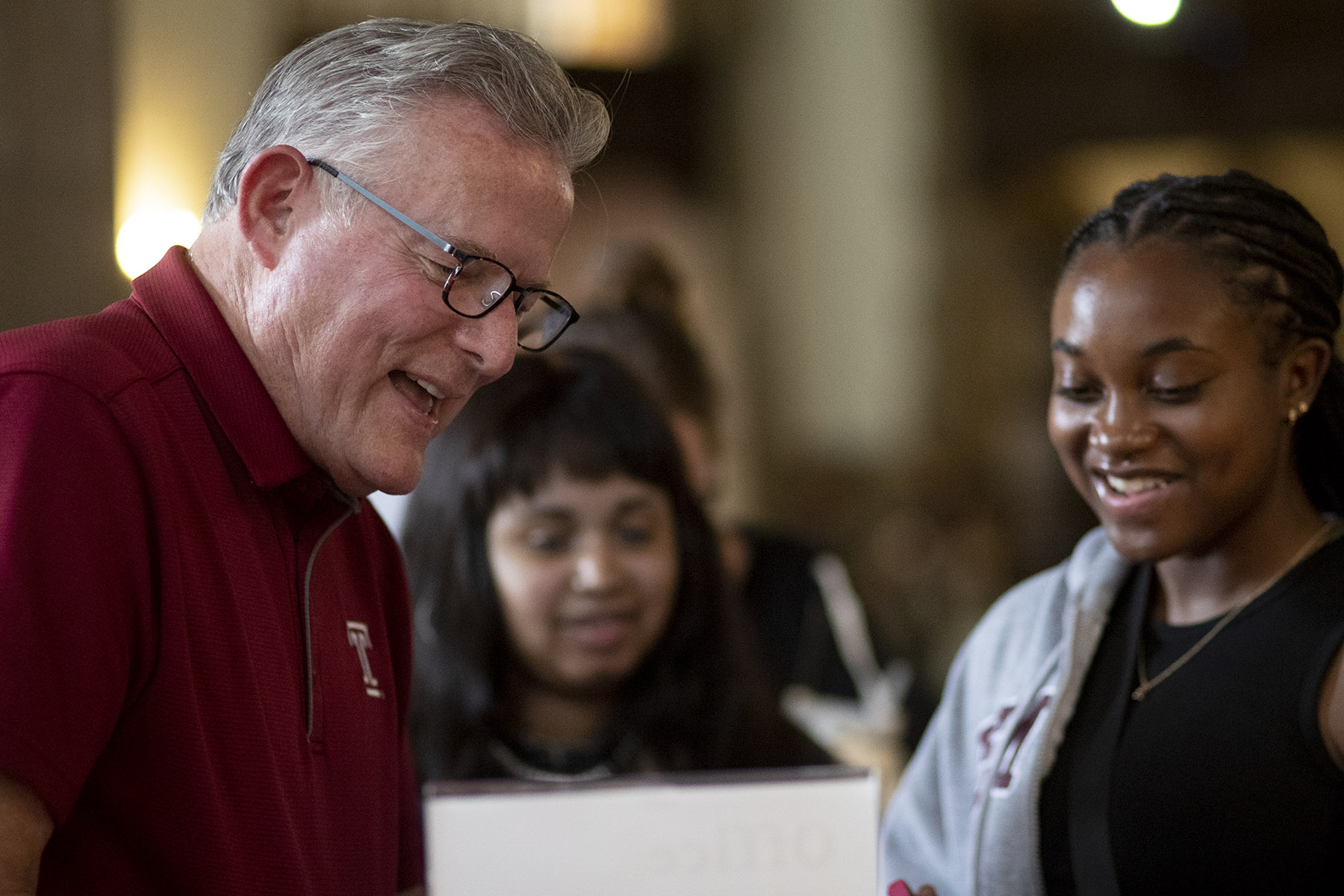
You have conducted journalism seminars around the world and are an avid traveler. What has motivated you to bring your teachings to other parts of the world?
From a professional standpoint, I take great pride in the training that I've been privileged to do in close to 50 countries around the world. I have taught journalists in both investigative journalism and what we call ‘solutions journalism,’ which is a new iteration of investigative reporting where you're not just exposing problems, but you're exploring potential solutions to problems as well.
I've taken particular pleasure in doing that work in emerging democracies. I've taught in almost every country in Eastern Europe, as well as in countries in Africa and Asia. In many cases, journalists are putting their lives on the line to do the things that we take for granted here as journalists, in terms of speaking truth to power and having access to public meetings and public records. These people have to fight for it and many of them have been jailed for doing so.
I'm on the board of an organization called the Organized Crime and Corruption Reporting Project. I attended their conference a couple of months ago, and we had journalists from Russia sitting right next to journalists from Ukraine. Both groups are driven by trying to tell their readers and viewers what's actually happening and why.
I also have great personal passion for travel. I wish every American could go to at least three or four other countries. I think we would be such a better nation if they could, and they could come to understand what we all have in common, as well as the richness of different cultures. We saw some of that this past summer, particularly with the World Cup, where Philadelphians who have never traveled anywhere got the opportunity to mix with people from other countries.
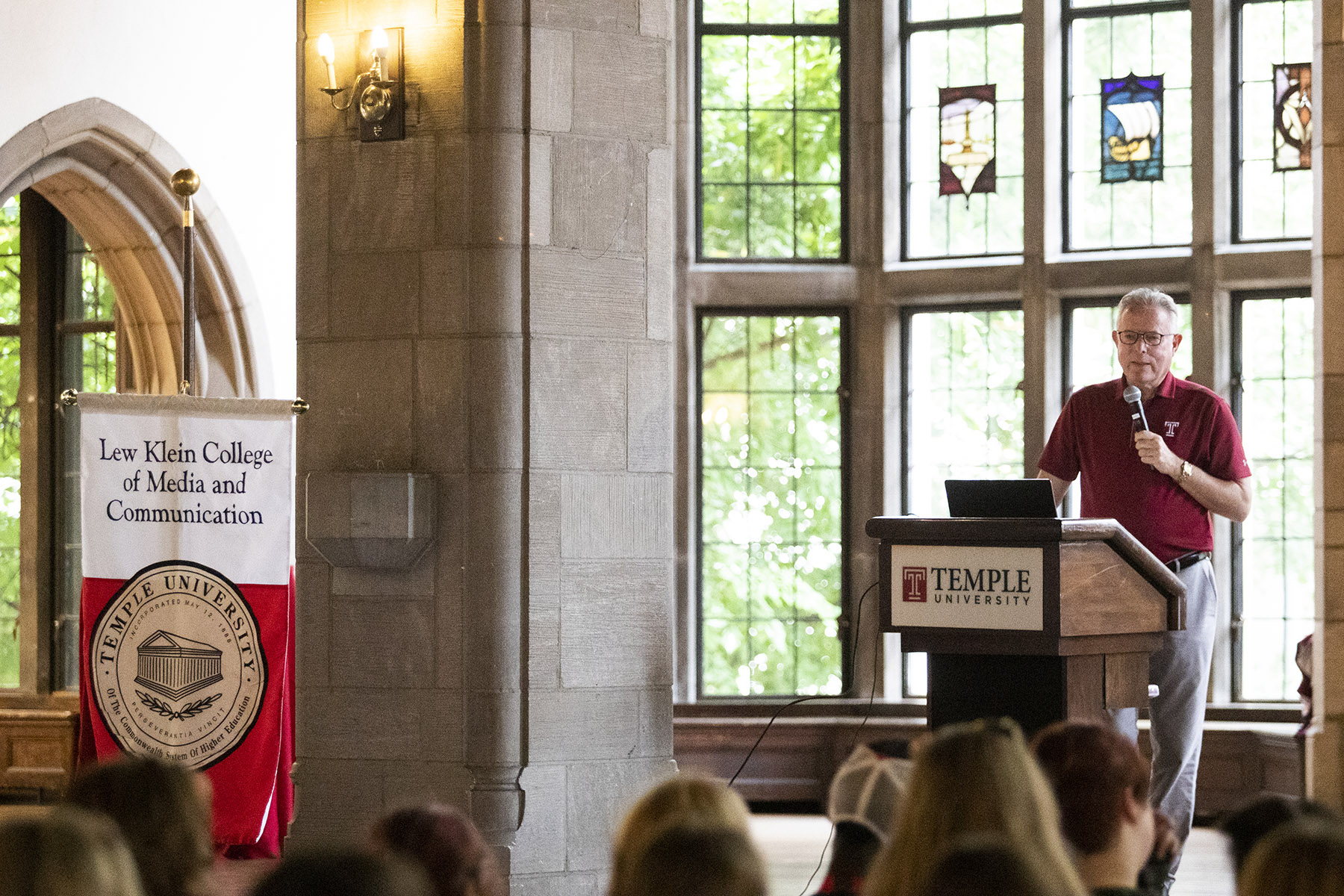
What excites you about continuing to work at Temple University?
Possibly the most exciting thing is that, in less than a year, we will be moving into a brand new, state-of-the-art facility right on North Broad Street. It will be called the Caroline Kimmel Pavilion for Arts and Communication.Our students and faculty are already doing world-class work, and now the prospect of doing that in a world-class facility is exciting. It’s something I've been working on for a decade.
I served as the interim provost at Temple for one year as a bridge for President Fry. During that period, the Rome campus began offering the full four years of study. Our Rome campus just celebrated its 60th anniversary. Our Japan campus is celebrating 45 years, and we now have two campuses in Tokyo and one in Kyoto, all of which are thriving.
It's an amazing period for Temple University. We were founded on a mission to provide opportunities for people who might not otherwise have had them and we remain very true to that mission. That mission comes with a lot of challenges that some other universities don't have, but I believe that the leadership we have right now in President Fry is the strongest visionary leadership that we've had and we are on an upward trajectory.
Hear from David Boardman and our other Globy Awardees at the 2026 Globy Awards luncheon on December 7th. For more information, visit: https://globalphiladelphia.org/globy-awards.


